
TL;DR
- AI SEO tools can save you time in keyword research, running audits, and optimising content.
- The top AI SEO tools list includes Surfer AI, Clearscope, Jasper, Semrush, Ahrefs, HubSpot, MarketMuse, Frase, Gemini and RankMath.
- Key features of AI-powered SEO tools include conversational search, automated audits, link building, predictive ranking, and entity-based optimisation.
- While AI SEO software seems perfect, it can still make mistakes, such as repeating the same ideas or not following user intent.
- Predictive capabilities and intent-driven optimisation are the future of SEO with AI.
Introduction
There was a time when keyword-stuffed websites would easily rank at the top of the search engine. Today, getting your website ranked requires much more than the right keywords. Keywords still matter, but that’s not enough.
With many advanced AI SEO tools now available, you can automate keyword research, generate optimised content, predict ranking potential, and conduct comprehensive site audits. That means tasks that once took hours can now be completed in minutes.
That said, not every tool you come across on the internet delivers the best results. If you are serious about creating a website and content that ranks and offers value to your audience, you need to pick the ones that actually help today.
That’s why in this blog, we evaluate the 10 best AI tools for SEO in 2026 based on features, accuracy, and real-world performance. We have tested each tool to help you choose the right one for your specific needs.
Why AI SEO Tools Matter in 2026
Google’s ranking algorithm has seen a prominent shift. Content that’s not optimised for AI Overviews or LLMs may not perform well. That’s where AI SEO tools come into play.
Here’s why they are essential:
- Save Time: With AI SEO tools, you don’t need to manually spend long hours to research keywords, conduct an audit, analyse your performance, or compare your content with that of competitors. AI tools are there to help you handle these tedious, manual jobs in minutes.
- Data-Driven Decisions: There’s no guesswork needed. AI predicts future trends and gives you a complete picture of which keywords might perform well, which pages require editing, and how you can improve visibility.
- Understand User Intent: AI SEO tools can infer a user’s intent from their queries. They know whether a user is looking for a short, simple answer to their question or an in-depth guide for a topic. These tools help you plan your content strategy that aligns with user intent.
What to Look for in the Best AI Tools for SEO
Before we get to the list, you should know what to look for when comparing different AI-powered SEO tools. Here are the key features you should look for (and based on which we have listed the tools below).
Predictive Capabilities
Following a trend is one thing, and predicting one is another. Imagine knowing a keyword that will become the hottest trend in advance. This predictive intelligence lets you create content before topics peak and capture search volume before competitors. That’s a perfect way to get a competitive edge.
Automation
Manually searching keywords or auditing content is now history. There are tools out there for automating keyword research, content audit, backlink tracking, and even meta tag suggestions. Using the right tool, you can go from spending 4–6 hours on the spreadsheets to 30 minutes.
Data Accuracy
Google algorithms have become smarter than ever. Your website is only as good as the data it presents to the readers. If you want high SERP rankings, you need to use AI tools that can pull high-quality, reliable, and verified data from trusted sources, and not outdated or vague ones that offer no value to the reader.
Scalability
You may be running SEO campaigns for multiple brands or a single campaign for a single large brand with a global presence. When looking for an AI-powered SEO tool, you need to factor in scalability. It should be designed to handle high-volume data, team collaboration, and different campaigns seamlessly.
Top 10 AI Tools for SEO You Should Try in 2026
Your search for the best AI tools in 2026 ends here. We’ve created a detailed AI SEO tools list that covers everything from affordable tools for small businesses to enterprise-grade software for agencies.
1. Surfer AI
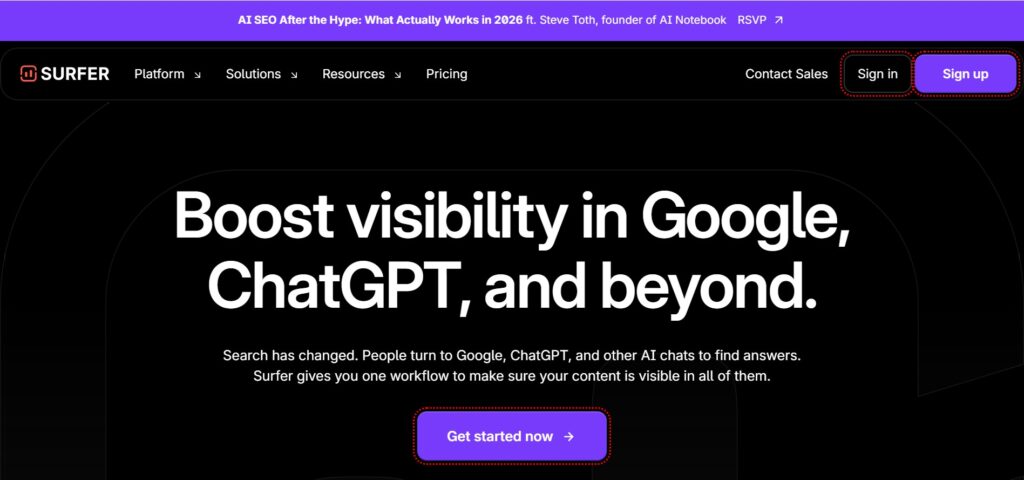
Best For: Content optimisation and AI-assisted writing
Surfer AI reads the highest-ranking content on the SERP for a target keyword and suggests improvements in real time. It combines SERP analysis, content optimisation, and keyword research into a single page. Surfer’s AI writing assistant can create an entire SEO-friendly post in user-friendly language, with the best keywords and accurate data.
Where it shines
- Extremely effective for updating existing content that’s stuck on page 2.
- Strong correlation between Surfer content scores and ranking improvements (especially for informational queries).
- AI writer produces genuinely readable content
- Works well for AI Overviews optimisation because it mirrors SERP consensus rather than creative abstraction.
- Content audit helps identify underperforming pages needing optimisation
Limitations
- Can be expensive for high-volume users
- Can encourage over-optimisation if used blindly
- Not the best for thought leadership or opinion-led content
- No deep backlink or technical SEO insights
Who should use it
- Content teams
- SEO agencies
- Sites publishing high-volume informational content
Not ideal for: Brand storytelling or original research-heavy content
2. Clearscope
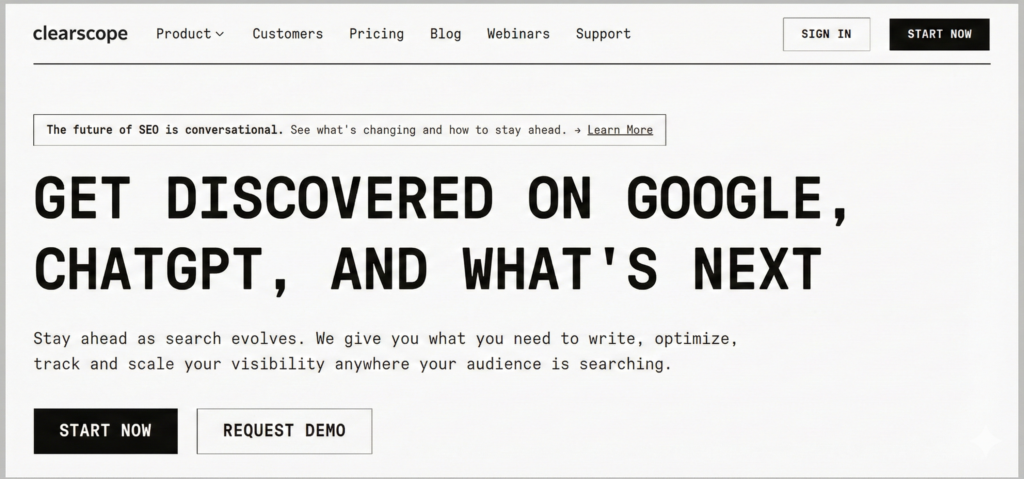
Best For: Editorial teams focused on content quality
If you are looking for the top AI SEO software that provides editorial-grade SEO content quality for writers and editors, Clearscope is your best option. It is known for its advanced content grading and readability checks, ensuring that every piece you write is both SEO-optimised and human-friendly.
Clearscope uses NLP models to score content against top-ranking competitors and assigns a content grade (A–F) based on entity coverage, semantic relevance, and readability alignment with ranking pages. Unlike Surfer, Clearscope prioritises clarity and editorial quality over raw optimisation.
Where it shines
- Produces human-readable, polished content
- Most accurate content scoring in the industry
- Excellent for maintaining editorial quality at scale
- Strong adoption by enterprise publishers and media brands
- Less “keyword stuffing risk” than Surfer-style tools
Limitations
- Limited automation
- No AI writing at scale (optimisation only)
- Steeper learning curve than Surfer
- Expensive for small teams
Who should use it
- Editorial teams
- SaaS companies
- Brands prioritising trust and authority (E-E-A-T)
3. Jasper AI (SEO Mode)
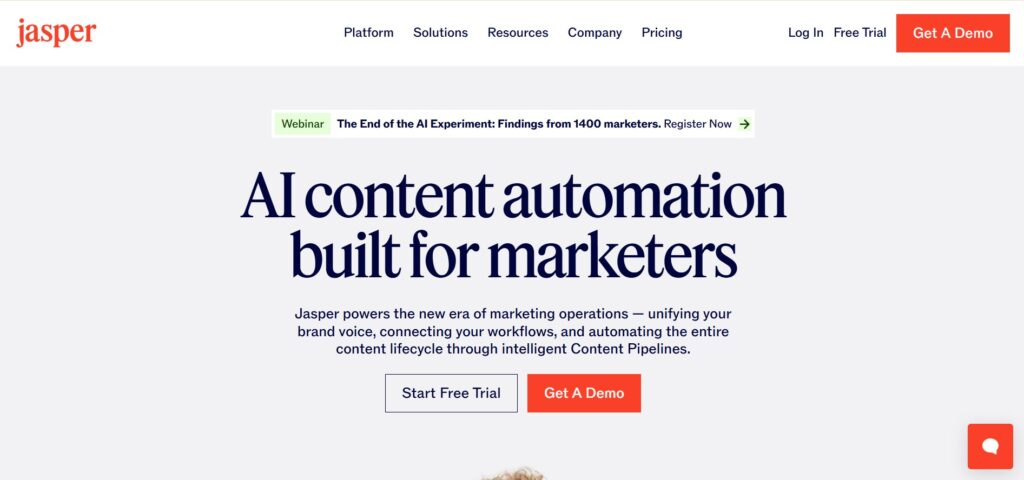
Best For: AI-assisted content production (not SEO strategy)
Jasper AI’s SEO mode is a real performance booster. You only need to provide the keywords, and the tool does all the hard work, from creating a content outline to suggesting meta tags, paragraphs, and FAQs.
Where it shines
- Speed (drafts content 5–10x faster than manual writing)
- Good for scaling blog content when paired with SEO tools
- Strong brand voice controls
Limitations
- No native keyword research or ranking data (SEO features require separate Surfer subscription)
- Requires human editing for accuracy and intent alignment
- Weak on factual verification
- Expensive for solo creators at scale
Who should use it
- Content marketers
- Agencies scaling drafts
Not a replacement for: Surfer, Ahrefs, or Semrush
Also Read: List of Top Content Writing Tools in 2025 that are Free
4. Semrush
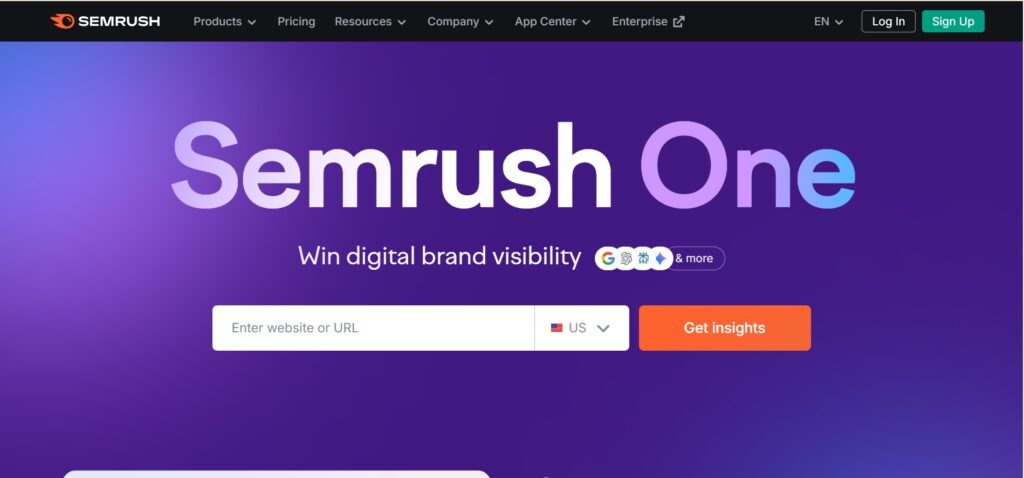
Best For: Agencies and marketers looking for a comprehensive traditional SEO and AI search visibility toolkit
Semrush is an all-in-one SEO platform that helps marketers improve search visibility through keyword research, competitor analysis, backlink tracking and site audits. It also offers AI visibility tools that help brands track their presence in AI-generated answers, monitor brand mentions and compare their visibility with competitors across supported AI platforms.
Where it shines
- Most comprehensive SEO and AI search visibility platform available
- Industry-leading keyword and competitor databases (25+ billion keywords)
- AI search visibility tracking and brand mention monitoring
- Predictive insights based on historical SERP patterns
- Excellent for planning long-term SEO roadmaps
Limitations
- AI suggestions still require human judgment
- Interface complexity for beginners
- Some advanced features require paid plans
Who should use it
- SEO professionals and digital marketing agencies
- Growth teams managing multiple sites
- Businesses looking to improve traditional and AI search visibility
5. Ahrefs
Best For: Backlink-driven SEO strategy and content gap analysis
Ahrefs has the largest backlink index in the industry (400+ billion links) and recently added AI features to simplify complex data. The AI Assistant explains SEO metrics in plain language and provides actionable recommendations based on your site’s specific situation. It also provides the best backlink data, content gap analysis, and keyword difficulty modelling.
Where it shines
- Backlink analysis remains unmatched
- Excellent for identifying why competitors rank
- AI Assistant makes complex data understandable
- Strong content gap insights for topical authority building
Limitations
- Less content-focused than Surfer or Clearscope
- No free plan (unlike Semrush‘s limited free tools)
Who should use it
- Advanced SEO users
- Link-building–focused teams
6. MarketMuse
Best For: Topical authority & content strategy (enterprise-level)
MarketMuse works with you to improve your content strategy, so your posts can rank well in search engines. It builds topic models rather than keyword lists. It tells you which content type to cover, where your content lacks depth, how much you should write, and which content strategy can drive results.
Where it shines
- Most sophisticated content strategy platform
- Personalised recommendations based on your site’s authority
- Excellent for large content operations
- Aligns closely with Google’s entity-based ranking systems
- Ideal for AI Overview eligibility via deep topic coverage
Limitations
- Expensive
- Steep learning curve (requires training)
- Overkill for small blogs
Who should use it
- Enterprise sites
- Large publishers
- Content-heavy SaaS brands
7. Frase
Best For: SERP-based content briefs & FAQs
Frase is the affordable alternative to Surfer and Clearscope. It uses the top-ranking websites for your target keywords and extracts common questions, key points, and heading structures to create an outline and content. It excels at search intent mapping, especially for informational queries. Its Answer Engine is particularly strong for FAQ-style and question-based content.
Where it shines
- Great for FAQ and snippet optimisation
- Fast brief creation
- Beginner-friendly
Limitations
- Shallow optimisation vs Surfer/Clearscope
- Limited scalability for large teams
Who should use it
- Solo bloggers
- Small content teams
Also Read: Top Free SEO Tools to Boost Your Website Ranking
8. Rank Math Content AI
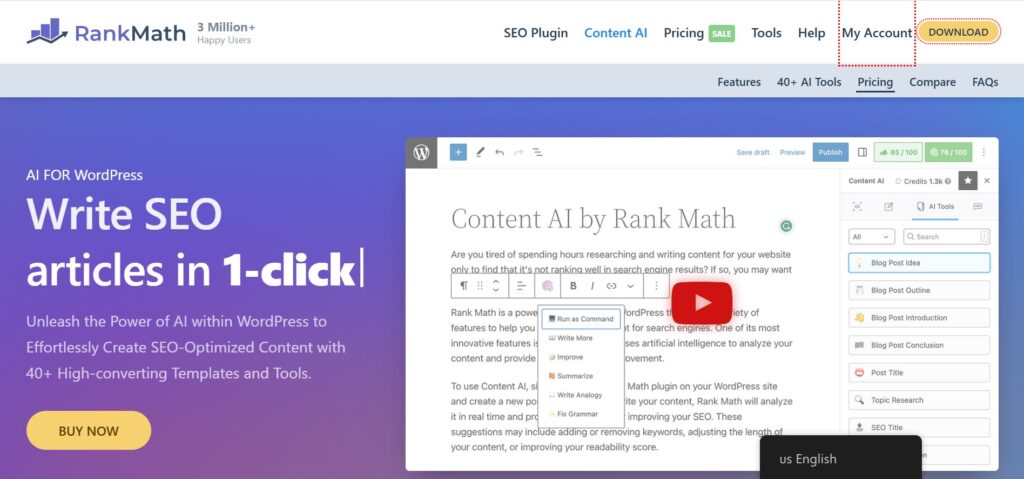
Best For: WordPress users needing on-site SEO optimisation
If you work on WordPress, try Rank Math. It’s a WordPress SEO plugin that offers readability suggestions, keyword ideas, and real-time writing tips. It can even create catchy titles. All of these can help you get your content ranked higher in search results. It’s basically the modern alternative to Yoast SEO, with better AI integration.
Where it shines
- Seamless WordPress workflow
- Affordable
Limitations
- No deep competitive analysis
- Limited predictive insights
- Only works with WordPress (not standalone)
Who should use it
- WordPress site owners
- Small businesses
9. HubSpot AI SEO Tools
Best For: SEO within a broader inbound marketing system
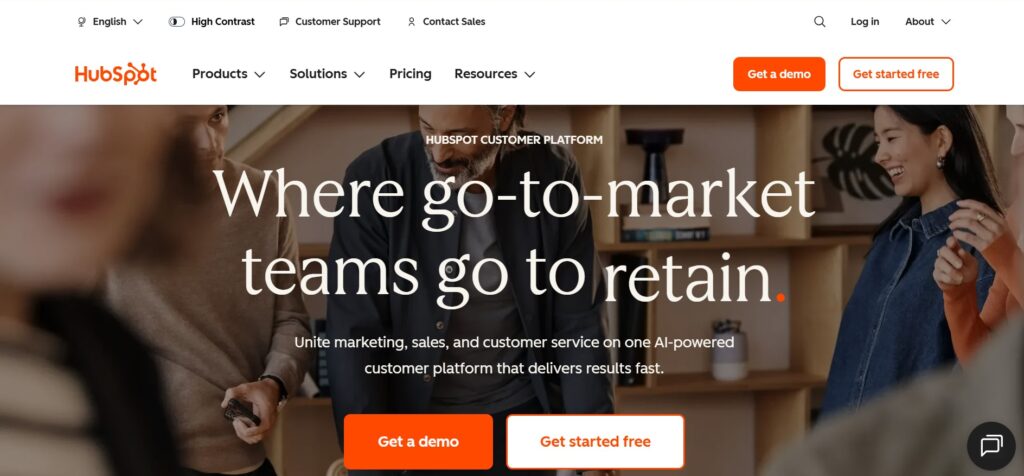
HubSpot is your all-in-one AI-powered SEO tool. It blends AI-driven SEO with CRM data. It researches keywords, creates a content outline, optimises your work for traditional and AI-powered search engines, and tracks your content performance across your sales funnel. It’s basically designed for businesses that want SEO, content management, and customer data in one platform.
Where it shines
- Seamless integration with HubSpot CRM
- Excellent alignment between content, leads, and revenue
- Great for B2B companies with complex sales funnels
Limitations
- Weaker SEO depth vs Semrush/Ahrefs
- Extremely expensive
- Only worth it if you use the full HubSpot stack
Who should use it
- B2B companies
- Marketing ops teams
10. Google Gemini (as an SEO Assistant)
Best For: Research, ideation, and content validation
Google’s Gemini is a highly useful tool for SERP intent analysis, content outlining, question expansion, and AI Overview–style answer testing.
Limitations
- Not a replacement for external SEO tools
Who should use it
- SEO strategists
- Content planners
- Editors validating clarity
Also Read: Save Hours with Gemini AI’s Powerful Deep Research Tool
Which Tool Should You Choose?
- Solo Blogger on a Budget: Rank Math & Frase
- Freelance Writer/Content Creator: Surfer AI or Frase
- Small Marketing Team (2-5 people): Semrush & Surfer
- Content Agency (10+ clients): Semrush & Surfer
- Enterprise Content Operation: Semrush, MarketMuse & Ahrefs
- WordPress-Only Users: Rank Math Pro & Frase
Key Features of AI-Powered SEO Tools
The main purpose of AI-powered SEO tools is to help you make smarter decisions rather than rely on guesswork. They transform the way you write and optimise content so that it’s not just SEO-friendly, but easier for the user to grasp. Here’s how it helps.
- Predictive Ranking Insights: AI can identify content trends, helping you know which topic or keyword will perform better.
- Entity-Based Optimisation: Create in-depth content that’s meaningful to the reader, instead of focusing on a single keyword.
- Competitor Keyword Mapping: Shows keywords your competitors are using and ranking for.
- AI-Generated Briefs & Outlines: Creating detailed outlines for your posts, covering each relevant sub-headline and saving you hours of manual research work.
- Automated Audits & Error Detection: Runs a quick website audit to identify common errors and suggest practical tips for improvement.
- Link-Building Recommendation Algorithms: Suggest top-ranking and high-authority websites you can reach out to for backlinks. This helps build your brand authority.
Common Mistakes of Using AI SEO Tools
While SEO tools can automate many repetitive tasks, they aren’t always accurate.
Here are a few common mistakes marketers make while using AI SEO tools:
- Creating robotic text with stuffed keywords
- Suggesting low-quality backlinks
- Repeating the same content outline or information
- Recommending misleading information
- Focusing on data rather than readability
- Not validating AI data with real SERP analysis
- Ignoring brand voice for AI-generated content
- Over-relying on a single tool
- Not fact-checking AI outputs
Also Read: Should Your Business Rely on AI for Website Content?
AI and SEO Strategies for 2026 (What’s Changing?)
Conventional SEO strategies might not produce the results you’ve been looking for. Those are outdated. If you want to keep up with Google’s ever-changing algorithm, you need AI’s assistance to make that work. Here are some strategies you must incorporate in 2026.
Rise of AI Overviews
You may have seen the short AI overview summaries at the top of the search results. This presents clear, comprehensive, and simple answers to complex user queries. Your content should be optimised for these AI overviews.
Zero-Click Results
Many users find relevant results in the search engine without clicking on any links. You must focus on optimising your content for featured snippets, FAQs, and schema markup, so that your page appears at the top.
Conversational Search
User search patterns have changed a lot lately, from short-tail and long-tail keywords to detailed questions (which look like they are chatting with an AI assistant). You should also focus on more question-based, conversational content to help them find your brand.
Topic Authority & Semantic Clustering
Content quality matters the most. Google wants in-depth content that covers the main themes relevant to your topic, rather than stuffed keywords. Well-written, comprehensive posts will position you as a trusted source of information.
User Intent
AI knows what users want when they type their queries or keywords in the search bar, such as whether they are comparing products, planning to buy a product, or finding useful information. You must write content focusing on their intent.
Content Freshness & Human Editing
Despite the popularity of AI, Google still values authentic, neatly written, and well-researched content with a human touch to it. So, instead of copying and pasting your content from AI tools, take ideas from them but keep it real. Use AI for research, outlines, and first drafts. Use humans for brand voice, expertise, fact-checking, and storytelling. Also, remember to always add personal experiences, case studies, and unique insights.
Future of SEO with AI: What Indian Brands Should Expect
The SEO landscape is evolving fast with AI-powered search features. The right SEO tool won’t just react to existing trends but also predict and quickly adapt to future ones. AI SEO tools can tell which content will rank well, where your audience’s intent will shift, and which keywords will deliver the results you are looking for. Beyond that, you should also expect:
- Predictive Content Planning:
AI tools will forecast trending topics 3–6 months ahead, using early SERP movement, community signals, and historical demand. Content calendars will shift from reactive keyword research to predictive publishing (ranking before demand peaks).
- Real-Time Optimisation:
Pages won’t stay static. Titles, meta descriptions, and key sections will auto-adjust based on SERP changes, with continuous A/B testing replacing monthly content refresh cycles.
- Voice & Visual Search Dominance:
By 2026–27, the majority of searches will start via voice or images. Multimodal SEO (spoken answers, entity-based content, image metadata, and schema) becomes a must, not optional.
- AI-Personalised Content:
The same page will serve different content variations based on user intent, device, and context. SEO shifts from “one page per keyword” to intent-driven, modular content blocks.
- Zero-UI SEO:
More decisions will be made by AI agents without clicks or screens. Visibility depends on structured data, clean entities, and machine-readable content, not just rankings.
Conclusion
Whether you are looking to analyse a website for its performance or improve your content game, the right AI tools for SEO can be your behind-the-scenes partner in every marketing strategy.
The tools covered in this guide represent the leading edge of AI-powered SEO in 2026. Your ideal setup depends on budget, team size, and primary need. Most successful strategies combine 2-3 tools. If you aren’t sure yet, start with one tool, master it, and then expand as your needs grow.
If you are still confused about choosing the right SEO tools for your business or want help with your SEO goals, schedule a free consultation with us. Our team has tested 30+ AI SEO platforms and can recommend the optimal stack for your specific goals, budget, and technical requirements.
FAQs
What are the best AI tools for SEO in 2026?
The best tool depends on your specific needs. In a broader sense, the top-performing AI-powered SEO tools in 2026 are Semrush and Surfer. For writers, Clearscope and Frase are the best. For agencies, Semrush or Ahrefs can be the most helpful tool. At the same time, RankMath and Frase are considered the best for budget-conscious users.
Are AI-powered SEO tools better than manual SEO?
Yes, in many aspects, AI SEO tools are better and smarter than manual SEO. The right software can save you tons of hours on research, repetitive tasks, and auditing.
Can AI create SEO-friendly content?
Yes, AI tools can create SEO-optimised content, including catchy titles, a comprehensive outline, and user-friendly content body using natural language processing. However, humans need to step in for strategic thinking, creativity, context awareness, fact-checking, and quality control.
Which AI tool is best for keyword research?
Semrush and Ahrefs’ AI Assistant are the best tools for keyword research.
How does AI improve on-page SEO?
AI works by automating on-page SEO tasks, such as creating meta tags, writing content, improving readability, and providing real-time suggestions.
What is the future of SEO with AI?
AI is expected to be more predictive and make search conversational. It will help create content that aligns with users’ intent while following Google’s algorithm updates.
Do AI SEO tools work for Indian businesses?
Yes, many advanced SEO tools offer regional content optimisation, covering Indian markets and offering multilingual support.
What’s the difference between AI SEO tools and traditional SEO software?
Traditional SEO software can provide raw data, such as keywords and backlinks. AI takes it a step further by better understanding search intent, predicting content ranking and future search trends, and grading content.
Are AI SEO tools expensive for small businesses?
Not all of them. Some enterprise-level solutions, such as those offered by Semrush, HubSpot, and Clearscope, can be expensive. But many tools, like RankMath and Frase, are affordable for small businesses.