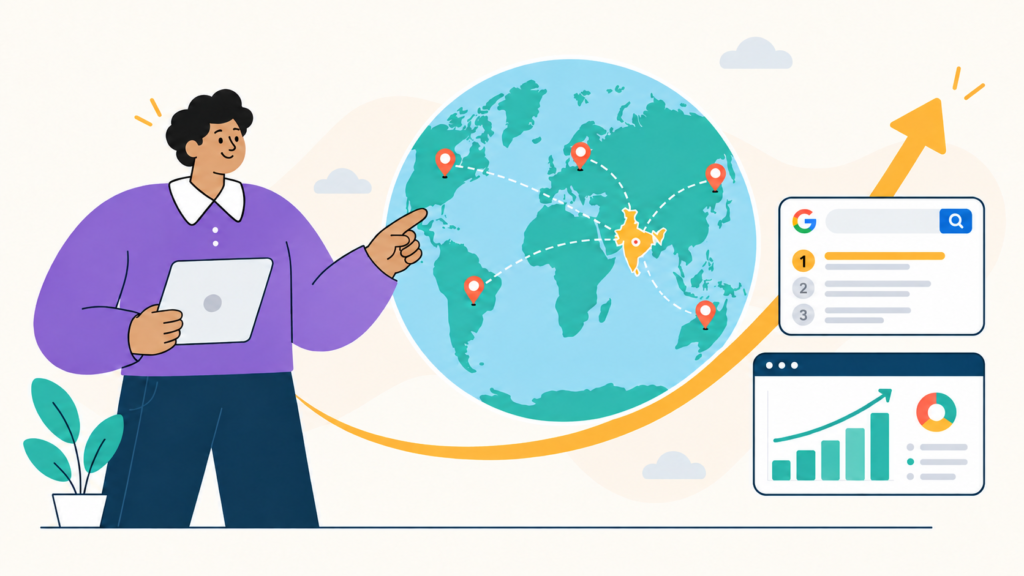
A few months into the year, and content marketing already feels different from what it did in 2025. The rules are shifting quickly.
Audiences are harder to impress. Search behaviour is changing. Many buyers now begin their journey in AI chatbots instead of Google. AI has flooded the internet with generic content. Short-form video delivers the highest ROI of any content format. And audiences, especially younger ones, are increasingly craving content that feels genuinely human.
For those of us who live and breathe content marketing – who genuinely believe that great content can change the way businesses grow – the focus now is not just on creating more content. It is about creating smarter content. Writing better. Distributing further. Measuring more honestly.
All of which means there has never been a better time to rethink how your content marketing works. So here are the 25 content marketing strategies and priorities brands should focus on in 2026. Print it out. Stick it on the board. Come back to it every quarter.
Let’s dive in.
TL;DR
- Content marketing in 2026 is shifting from volume to value: fewer, deeper, more useful pieces outperform mass-produced AI content.
- Optimise for AI discovery (AEO + GEO), not just traditional SEO.
- Short-form video, live content, and authentic human storytelling are now essential.
- Build owned audiences through email, first-party data, and communities.
- Use AI to scale production, but keep strategy, creativity, and brand voice human.
- Focus on engagement, distribution, and consistency, not vanity metrics or content quantity.
25 Content Marketing Strategies for 2026
1. Stop Producing Content at Volume. Start Producing It at Depth.
This is the single most important shift in 2026 content marketing. You will get better results from fewer, stronger pieces built on proof, real audience behaviour, and clear business impact, not mass publishing.
The internet is drowning in AI-generated content. Generic articles that could have been written about anyone, for anyone, are invisible. What stands out and what earns rankings, citations, and trust is content that is genuinely expert, specific, and useful to a clearly defined reader. Publish less and invest more in each piece.
2. Optimise for AI-Powered Search, Not Just Google
According to a G2 report, 50% of B2B software buyers now start their journey in AI chatbots, not Google. Optimising for GEO (Generative Engine Optimisation) is not optional anymore. It is how you get cited when buyers ask ChatGPT or Gemini for recommendations.
AEO (Answer Engine Optimisation) should now sit alongside traditional SEO in your strategy. This means structuring content to directly answer questions, earning brand mentions across authoritative sources, building a strong network of backlinks and citations, and publishing the kind of well-organised, expert content that AI tools surface in generated answers.
Unlinked mentions of your brand on third-party sites are increasingly influential for AEO. Invest in digital PR and expert reputation-building across media outlets, niche publications, and UGC platforms.
3. Make Short-Form Video a Non-Negotiable
If you are still treating video as an optional bolt-on to your content strategy, 2026 is the year to stop. 95% of internet users watch videos monthly, and short-form video delivers the highest ROI of any content format.
TikTok is forecast to surpass 2.20 billion monthly active users by the end of 2026. Instagram Reels continues to dominate discovery, with Meta reporting 50% of user time now spent on Reels. If your audience is on these platforms and you are not producing video, you are invisible where it counts most.
Start with what you already have. A great blog post can become a 60-second explainer. A client case study can become a founder’s talking-head video. A data point can become a shareable reel. The content is already there; the video is just the format.
At Justwords, we have seen first-hand that the teams consistently winning in content marketing are those who stopped treating video as a separate project and started treating it as a default distribution format for every piece of content they produce.
4. Use Live Video More Deliberately
Live video generates significantly higher engagement than pre-recorded content. And in 2026, it serves another valuable purpose: it feels unmistakably human at a time when audiences are increasingly sceptical of polished, AI-assisted content.
Webinars, live Q&As, behind-the-scenes content, founder conversations – these formats build trust in ways that edited video cannot. They also give you content to repurpose: clips, transcripts, social posts, and blog articles, all from a single live session.
5. Treat Your Email List as Your Most Valuable Content Asset
As organic social reach declines and AI-generated content floods search results, email is emerging as one of the most resilient distribution channels in content marketing. Your email list is an audience you own. No algorithm can reduce your reach overnight.
In 2026, the brands that own direct relationships with their audiences are the ones most insulated from search volatility, social platform changes, and AI-generated noise. Grow your list actively. Segment it meaningfully. And use it consistently as your primary channel for distributing your best content.
6. Build a First-Party Data Strategy
Third-party cookies are no longer reliable across the modern web. Marketers globally are rebuilding their strategies around privacy-first data models. 62% of brand marketers say first-party data will become more important over the next two years.
First-party data, collected directly from your audience through your own channels, is now a genuine competitive advantage. Content plays a central role here: lead magnets, email sign-ups, gated resources, interactive tools, and community membership all generate first-party data while delivering value to your audience. Start building this infrastructure in 2026.
7. Add Original Research to Your Content Mix
86% of marketers plan to increase research budgets in 2026, with those publishing original data reporting higher conversion rates (64%) and stronger SEO performance and organic traffic (61%).
Original research is one of the most powerful content formats available. It earns backlinks naturally, establishes authority, generates press coverage, and gives your content something that AI tools cannot replicate: proprietary insight. Even a modest survey of 100 customers in your niche can produce data worth citing and worth ranking for.
8. Use AI as a Production Layer, Not a Strategy Layer
AI is now a production layer, not the whole strategy. Use it for drafts, repurposing, and research help, but keep human judgment for claims, sourcing, and brand voice.
Nearly 94% of marketers plan to use AI for content creation in 2026. The differentiator is not whether you use AI; it is how. The companies that are successful will be more agile and less wasteful of resources by examining how, when, and why they use AI, and when they do not. Use AI to handle the mechanical work: drafts, repurposing, summaries, and format variations. Keep the expertise, the opinion, and the editorial judgment firmly human.

9. Make Human Distinctiveness Your Competitive Advantage
As generative AI content floods every channel, customers gravitate toward brands that feel unmistakably human.
Interviews, behind-the-scenes stories, and expert insights will differentiate brands in an AI-saturated landscape. Prioritise transparency, human connection, and consistent proof of expertise across every platform and audience touchpoint. Share opinions. Tell real stories. Publish first-person experience. These are the things AI cannot genuinely do. And in 2026, they are exactly what audiences are hungry for.
10. Build a Content Topic Bank and Actually Use It
One of the most persistent frustrations in content marketing is the weekly scramble: what do we write about this week? It is a time-consuming, creativity-killing question that has a simple structural fix.
Build a content topic bank – a shared, rolling repository of ideas, angles, and briefs that your entire team contributes to. Ask every team member for five ideas a month, each with a brief rationale. Layer in keyword research, competitor gap analysis, and audience questions. You should never be starting from zero.
This is one of the first things we help clients fix at Justwords. A well-maintained topic bank, built around real search intent and audience pain points, transforms content production from reactive to proactive. The quality of content ideas improves dramatically when there is no deadline pressure to manufacture them.
11. Repurpose Your Best Content Systematically
Every strong piece of content you produce has a longer lifespan than a single publish. A 2,000-word article can become a LinkedIn carousel, a short video script, an email newsletter, a Twitter thread, a podcast episode, and a Quora answer, each reaching a different audience in a different format.
In 2026, AI tools make repurposing faster and more efficient than ever. The human layer is adding judgment, maintaining brand voice, and ensuring accuracy. Build a repurposing workflow. Not a one-off exercise, but a repeatable process that runs every time a piece of content is published.
12. Invest in Episodic Content to Build Loyal Audiences
There is a reason the world could not wait for the next episode of a series it loved. The anticipation, the consistency, the sense that something valuable is coming – these are the qualities that build genuinely loyal audiences.
In content marketing, episodic formats work the same way. A weekly newsletter with a consistent theme. A monthly deep-dive series. A regular live Q&A. When your audience knows what to expect and when to expect it, you build the kind of habit-forming engagement that one-off pieces simply cannot create.
13. Build Your Query Fan-Out Strategy
In 2026, search engine success will rely on a brand’s ability to map query fan-outs and produce content to match them. AI chatbots have trained users to ask follow-up questions. Content marketers need to think in terms of a conversation rather than matching the intent of a single keyword.
This means expanding how you approach topic coverage. For every primary keyword or topic you write about, map the natural follow-up questions a reader would ask. Build content that answers those, too. This creates a content ecosystem that captures multiple stages of the research journey and significantly improves your chances of being cited in AI-generated answers.
14. Focus on Engagement, Not Just Reach
Reach without engagement is noise. A ‘like’ is a positive sentiment. A share is an endorsement. A comment, a query, or a lead is the form of engagement that actually matters for your business.
Track each form of engagement separately to understand what your content is actually doing. Do not settle for impressions as a success metric. Ask: Did this content drive a conversation? Did it generate a sign-up? Did it move someone closer to a purchase? If the answer is no, the content is not doing its job regardless of how many people saw it.
15. Never Publish Content Without a CTA
Content without a call to action is a conversation that ends nowhere. You have done the work of attracting the reader. So do not let them leave without knowing what to do next.
The rule is simple: you do not get what you do not ask for. Every piece of content should invite the reader to take the next step, whether that is reading a related article, downloading a resource, signing up for your newsletter, contacting you, or making a purchase. Match the CTA to the funnel stage. Top-of-funnel content should invite further reading; bottom-of-funnel content should invite conversion.
16. Spend as Much Time Promoting as Creating
The most common content marketing mistake is publishing great content and then doing almost nothing to distribute it. If you have invested three hours in writing an excellent article, invest at least an hour in promoting it.
Build a promotion checklist for every piece of content: social posts (across platforms, in native formats), email to your list, sharing in relevant communities, direct outreach to sources cited, influencer sharing requests. The content does not end at publish. It begins there.
17. Stop the Sales Pitch Overload
Nobody wants to be sold to, especially not in content that is supposed to be genuinely useful. If every blog post, social update, and email is a thinly veiled pitch, your audience will disengage quickly.
Follow the principle of giving value consistently before asking for anything. A practical ratio: for every piece of explicitly promotional content you publish, produce at least five that offer genuine, no-strings-attached value. This builds the kind of trust that makes promotional content land well when you do share it.
18. Build Relationships With Influencers and Creators
In 2026, investment in creator content will grow by 61%. Brands are taking a strategic, long-term view of creator partnerships, reaching beyond algorithm-driven social media feeds and into community-focused platforms like Substack and Discord.
Influencer marketing today is not about chasing follower counts. It is about finding creators whose audiences genuinely overlap with your target customers, and building authentic, long-term relationships. Micro-influencers with highly engaged niche audiences consistently outperform macro-influencers on cost per meaningful engagement. Start with relationship first (share their work, comment substantively, offer value) before you ever ask for a share.

19. Make Your Website Content Work Harder
Your website is your owned channel – the one asset no algorithm change can take from you. And yet most businesses underinvest in keeping it current, relevant, and conversion-optimised.
Audit your highest-traffic pages quarterly. Check whether they are still answering the questions they were built to answer. Update statistics, refresh examples, improve CTAs, and fix any structural issues that are preventing conversions. A well-maintained, conversion-optimised website compounds in value over time in ways that social content cannot.
20. Prioritise Backlink Building as a Monthly Discipline
Strong backlinks remain one of the most durable ranking signals in any search environment, traditional or AI-powered. But link-building requires consistent, deliberate effort. It does not happen by accident.
Build it into your monthly content calendar: identify link-worthy content, reach out to relevant websites, look for broken link replacement opportunities, pursue guest posting relationships, and track which content types earn the most links naturally. Make it a trackable metric, not an occasional experiment.
21. Improve Your Content’s Mobile Experience
Mobile is where the majority of content is consumed. If your blog, landing pages, or email newsletters are not fully optimised for mobile reading in terms of page speed, font size, image formatting, and navigation, you are creating friction at the most critical point of engagement.
Run a mobile experience audit this month. Check your Core Web Vitals in Google Search Console. Test load times on 4G connections. Make sure your CTAs are thumb-friendly. These are not minor technical details; they directly affect how long people stay on your content and whether they come back.
22. Invest in Community Building
Co-creating with communities invested in your brand has become increasingly important in 2026. With the proliferation of AI-generated content, people are craving authenticity and human connection.
Nearly 40% of consumers trust micro-community recommendations as much as personal ones, which is a strong sign of these networks’ peer-to-peer credibility. Whether it is a newsletter community, a LinkedIn Group, a Slack workspace, or a branded Discord server, investing in community builds the kind of loyal, engaged audience that drives long-term brand growth.
23. Build an Annual Content Marketing Plan with Quarterly Reviews
A content plan is not a content calendar. A content plan starts with your business goals (the revenue, leads, or traffic you want to achieve) and works backwards to the content activities required to achieve them.
Build one at the start of the year. Set 2 or 3 core metrics (organic traffic growth, lead generation, content-attributed revenue). Review them quarterly and adjust based on what’s working. The brands that consistently win with content marketing are the ones that treat it as a strategic investment with measurable targets, not a creative exercise with vague outcomes.
24. Measure What Actually Matters
In 2026, content marketing stops guessing and starts proving. Content marketers who still rely on intuition and vanity metrics will get left behind. The winners will be those who treat content like a living data ecosystem, measuring what matters, feeding insights back into decisions, and letting data shape the strategy without killing its soul.
Define your top 10-15 metrics at the start of the year, aligned to your business goals. Traffic is a starting point, not a destination. Track conversion rates, content-attributed leads, time on page, return visitors, and revenue influence. The insight from this data should directly shape what you create next.
25. Commit to Consistency Above All Else
Content marketing is not a sprint. It never has been. The brands that win are the ones that show up consistently – publishing on schedule, engaging with their audience, and compounding their content library over months and years.
This is easier said than done. Client demands, internal priorities, and creative fatigue all get in the way. But here is the truth: one excellent piece of content published every week for a year is worth infinitely more than a burst of ten articles followed by three months of silence. The content playbook in 2026 rewards what consistent, focused marketers do best – depth over breadth, authenticity over polish, and direct relationships over third-party dependency.
Build the systems, the calendars, and the processes that make consistency achievable even in a busy week.
Quick Reference: The 25 Content Marketing Strategies for 2026
- Stop producing at volume, invest in depth
- Optimise for AI-powered search (AEO + GEO)
- Make short-form video non-negotiable
- Use live video more deliberately
- Treat your email list as your most valuable asset
- Build a first-party data strategy
- Add original research to your content mix
- Use AI as a production layer, not a strategy layer
- Make human distinctiveness your competitive advantage
- Build a content topic bank and use it
- Repurpose your best content systematically
- Invest in episodic content for loyal audiences
- Build a query fan-out strategy
- Focus on engagement, not just reach
- Never publish without a CTA
- Spend as much time promoting as creating
- Stop the sales pitch overload
- Build influencer and creator relationships the right way
- Make your website content work harder
- Prioritise backlink building as a monthly discipline
- Improve your content’s mobile experience
- Invest in community building
- Build an annual plan with quarterly reviews
- Measure what actually matters
- Commit to consistency above all else
One Final Thought
So that is the Justwords team’s 25 content marketing strategies for 2026.
The content marketing landscape has never been more complex or more full of opportunity for brands willing to do the work properly. AI has changed the rules, but it has not changed the fundamentals: audiences trust content that is genuinely useful, authentically human, and consistently excellent.
Get your plans up on the wall. Come back to them quarterly. And if you need a partner to help you execute on content strategy, creation, or distribution, the Justwords team is ready. Let’s talk.
FAQs
1. What are the most important content marketing trends for 2026?
The defining shifts are: AI-powered search changing how content is discovered (AEO and GEO are now essential alongside SEO), short-form video delivering the highest ROI of any format, human authenticity becoming a genuine competitive advantage as AI content floods the internet, first-party data replacing third-party cookies as the foundation of audience strategy, and original research emerging as the highest-authority content format for driving backlinks and conversions.
2. What is the difference between SEO, AEO, and GEO in 2026?
SEO (Search Engine Optimisation) focuses on ranking in traditional search results like Google and Bing. AEO (Answer Engine Optimisation) focuses on getting your content cited in AI-generated answers from tools like Google AI Overviews and Bing Copilot. GEO (Generative Engine Optimisation) focuses on being recommended by AI chatbots like ChatGPT when users ask for product or service recommendations. All three are now part of a complete content visibility strategy.
3. How has AI changed content marketing strategy in 2026?
AI has simultaneously raised the bar and lowered the floor. It has made generic, high-volume content production easier, which means low-quality content is now more abundant and less visible than ever. At the same time, AI has made distribution, repurposing, and research assistance faster. The brands winning with content in 2026 use AI to accelerate production while maintaining human expertise, original perspective, and editorial judgment as the differentiator.
4. How do I make my content stand out in 2026?
Invest in original research, first-person expertise, and specific audience focus. Publish less, but publish better. Show your brand’s genuine voice and perspective rather than producing neutral, AI-compatible content. Build direct audience relationships through email and community. And optimise for AI-powered discovery by earning mentions and citations across authoritative sources.
5. What content formats deliver the best ROI in 2026?
Short-form video leads on ROI, followed by blogging and SEO-optimised long-form content, email newsletters, live video, and user-generated content. Original research is the highest-authority format for earning backlinks and press coverage. The most effective content strategies combine formats rather than concentrating on one.
6. How should small businesses approach content marketing in 2026?
Focus on one or two channels and do them well, rather than spreading thin across every platform. Build an email list from day one (it is the one audience you fully own). Invest in a small number of genuinely excellent articles per month rather than a high volume of generic ones. Use AI tools to speed up production, but maintain a clear human voice and genuine expertise in your niche. And measure against business outcomes, not just traffic.