
TL;DR
- Map one niche into pillar + cluster topics (~10–20 articles).
- Publish the pillar first, then supporting clusters.
- Interlink everything (pillar ↔ clusters ↔ clusters).
- Update and expand content regularly.
- Authority comes from structured coverage, not content volume.
Let’s say you’re the founder of a small SaaS product and you’re trying to get traffic from Google. You’ve published a few long-form posts that are definitely better than what’s ranking.
Then, nothing happens. A few impressions here and there. But no steady traffic.
So you start hearing this phrase everywhere:
Topical authority.
Apparently, you don’t just need good content; you need structured and connected content. Content that proves you actually know your niche.
But then the real problem hits: You understand the concept, but not the execution.
How many articles do you need? Which topics actually matter? What’s a pillar page supposed to look like? How do you know if you’re covering a topic completely or just guessing?
That’s what this guide is for. Instead of definitions and abstract frameworks (our main topical authority guide already covers that beautifully), we’re going to walk through the actual execution with real examples and practical templates.
Let’s start.
Why Do Most Brands Struggle with Topical Authority?
Usually, it’s because they skip steps. They jump straight into publishing content without mapping their topic. They write dozens of articles without building internal links. They never revisit or improve what they’ve already published.
The result? Lots of content, but very little authority.
To avoid that, it helps to treat topical authority like a process instead of a publishing habit.
Read More: Learn about the 5 Cs of Content Creation
The Topical Authority Framework: How Authority Actually Gets Built
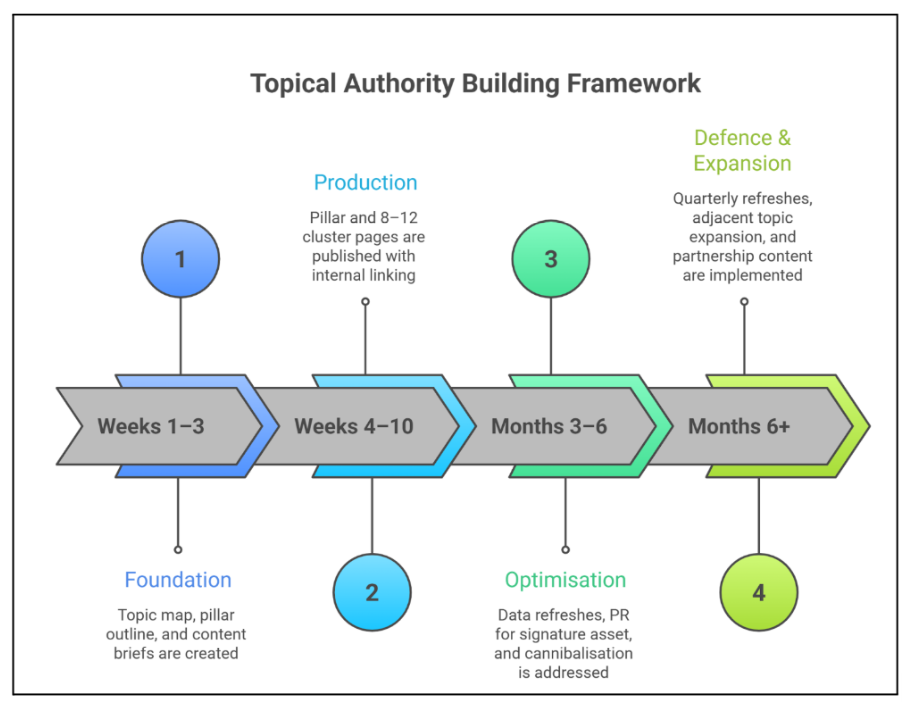
Here’s a simple four-phase framework. Treat it like a product you build and iterate:
- Stage 1 – Foundation (weeks 1–3): Topic map, pillar outline, content briefs.
- Stage 2 – Production (weeks 4–10): Publish pillar + 8–12 cluster pages, implement linking.
- Stage 3 – Optimisation (months 3–6): Data refreshes, PR for the signature asset, merge/redirect cannibals.
- Stage 4 – Defence & Expansion (months 6+): Quarterly refreshes, adjacent topic expansion, partnership content.
Step-by-Step: How to Build Topical Authority in a Niche
Let’s move from framework to execution.
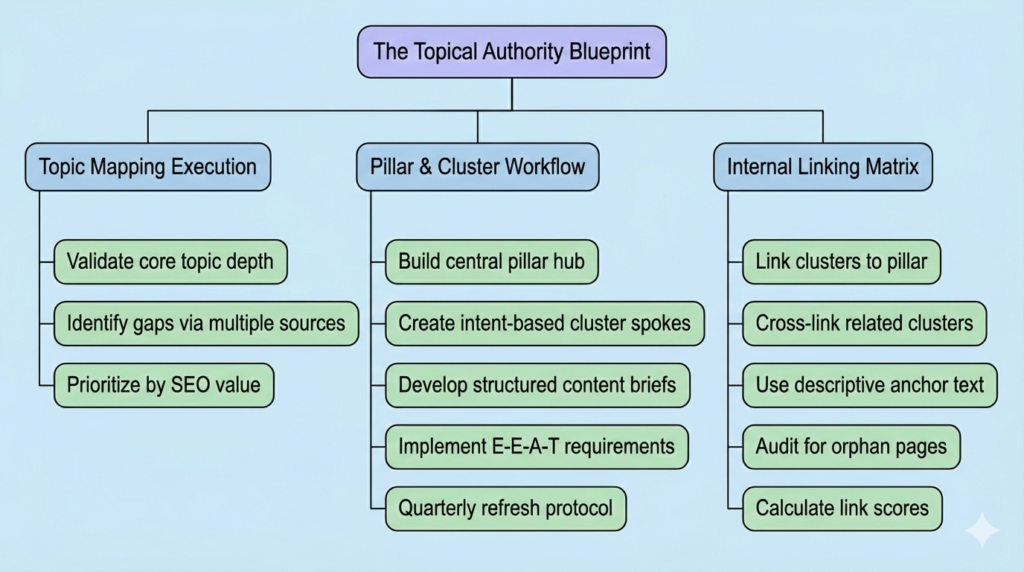
Execution Playbook A: Topic Mapping That Guarantees Coverage
Most topic mapping starts and ends with keyword tools. The problem is that keyword tools don’t always reflect how people actually search or what they truly want to learn. That’s why strong topical coverage usually comes from combining multiple sources that capture breadth and depth.
Step 1: Validate Your Core Topic
Before mapping subtopics, make sure your main topic has enough depth.
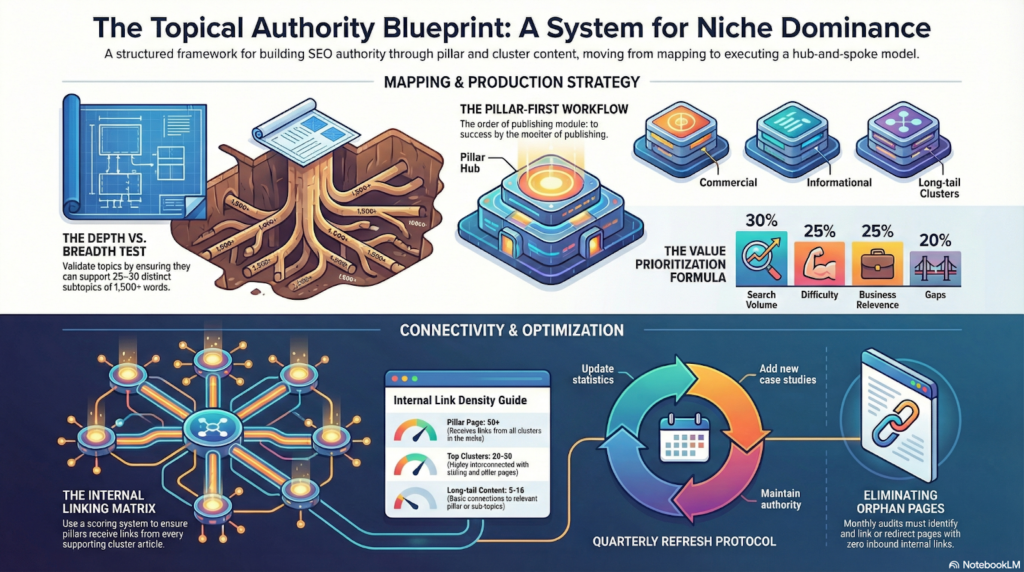
A quick depth vs. breadth test:
- Can you list 25-30 distinct subtopics without repetition?
- Does each subtopic have enough substance for a 1,500+ word article?
If you struggle to reach 20 subtopics, go narrower. If you easily get to 50+ subtopics, consider splitting into 2 clusters
For example:
- “Marketing” is too broad (500+ subtopics)
- “Email subject lines” is too narrow (5-8 subtopics)
- “Email marketing automation” usually sits in the right range (30-35 subtopics)
Step 2: Use Multiple Sources for Topic Gaps
Instead of relying on one tool, combine several inputs:
- Keyword tools (Semrush/Ahrefs): Core keywords and related terms
- People Also Ask: AlsoAsked.com or Google PAA boxes
- Competitor gaps: What do they rank for that you don’t?
- Customer questions: Sales calls, support tickets, Reddit, Quora
- Topic visualisation: See how subtopics connect
Each source reveals a different layer of user intent. Together, they create more complete coverage.
Step 3: Prioritise Topics by SEO Value
Don’t publish every subtopic immediately. A simple way to prioritise is to evaluate:
- Search volume (30% weight)
- Keyword difficulty (25% weight)
- Business relevance (25% weight)
- Competitive gap (20% weight)
This helps you publish the most impactful content first.
Read More: AI Keyword Research: How to Find High-Intent Keywords in 2026
Execution Playbook B: Pillar & Cluster Production Workflow
Once topics are mapped, the next challenge is consistency. Many content teams publish irregularly or produce cluster articles without depth or structure. A standardised workflow solves that.
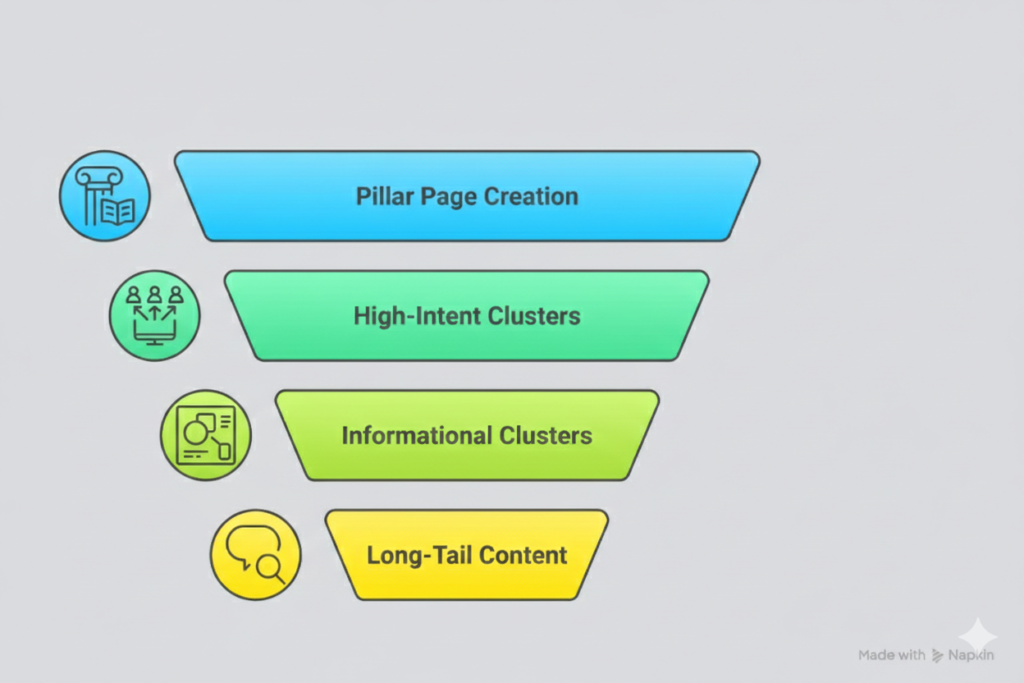
Publishing Priority Order
Most successful clusters follow a predictable order:
- Pillar page first (weeks 1-2) – Establishes topic structure for Google
- High-intent commercial clusters (weeks 3-5) – Drive conversions early
- Informational clusters (weeks 6-9) – Build topical breadth
- Long-tail content (weeks 10-15) – Capture specific queries
This structure also helps search engines understand topical relationships earlier.
Step 1: Build a Strong Pillar Page First (The Hub)
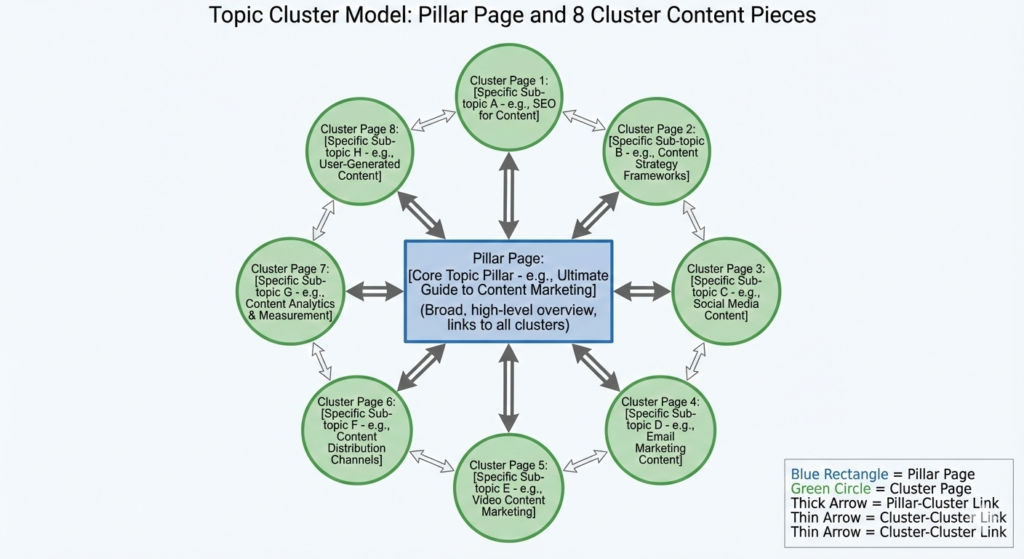
A pillar page acts as the foundation of your topic. It should cover the topic broadly, link to deeper subtopics and get updated regularly.
Think of it as a central hub. Every cluster article connects back to it.
“Pillar pages should summarize each topic facet, covering key sections briefly, with links to deeper cluster pages. Cluster pages should target specific facets, that should be covered in-depth, ensuring unique purpose and query intent for each page.”
– Aleyda Solis, International SEO Consultant & Author
Step 2: Build Cluster Articles Around User Intent (The Spokes)
Cluster articles answer specific queries within your topic.
For example, if your pillar is:
E-commerce Shipping
Cluster topics might include:
- How to calculate shipping costs
- Best packaging methods
- Courier comparisons
- Shipping automation tools
Each cluster:
- Links back to the pillar
- Links to related clusters
This builds topical relationships.
Step 3: Create Structured Content Briefs
Strong cluster articles usually start with a clear brief. A good brief defines target keywords, search intent, article structure, internal linking targets and required examples or data. This keeps articles aligned with the topic instead of drifting off-course.
For every cluster article, include:
1. Target & Intent
- Primary keyword + 3-5 secondary keywords
- Search intent: Informational/Commercial/Navigational
- User goal: “The reader wants to [accomplish X]”
2. E-E-A-T Requirements
- 3-5 expert quotes or data points with sources
- 2+ real examples or case studies
- 3+ screenshots or visuals
- Author credentials highlighted in bio
3. Internal Linking
- Link to pillar (intro + conclusion)
- Link to 3-5 related clusters with descriptive anchors
- Receive links from 3+ existing articles
4. Quality Benchmarks
- 1,500-2,500 words (comprehensive depth)
- Grade 8-10 reading level
- 3-5 external links to authoritative sources
Step 4: Optimisation Checklist
- Meta title (50-60 characters, keyword included)
- Meta description (150-160 characters, compelling)
- URL slug (keyword-focused, concise)
- H1 (unique, includes primary keyword)
- Image alt text (descriptive, keyword-relevant)
Step 5: Quarterly Refresh Protocol
Every quarter, refresh the top 20 articles. Do the following:
- Update statistics with current data
- Add new examples or case studies
- Check and fix broken links
- Refresh meta descriptions for better CTR
- Add new sections for emerging trends
- Update publication date
Read More: 10 Best AI Tools for SEO in 2026 (Tested & Compared)
Execution Playbook C: Internal Linking Matrix (The Secret Sauce)
Why Is Internal Linking So Important?
Internal linking is one of the most underestimated SEO strategies. It helps search engines understand which pages are related, which pages are important and how exactly content flows across the site.
But internal linking often breaks down as content grows. New articles get published. Old ones never get updated. Some pages end up with no internal links at all.
A simple linking structure prevents that.
Here’s what Google’s John Mueller said when asked whether internal linking is important if you’ve structured data:
“Yes, absolutely. It’s something where internal linking is super critical for SEO. I think it’s one of the biggest things that you can do on a website to kind of guide Google and guide visitors to the pages that you think are important. And what you think is important is totally up to you. You can decide to make things important where you earn the most money, or you can make things important where you’re the strongest competitor, or maybe you’re the weakest competitor. With internal linking, you can really kind of focus things on those directions and those parts of your site. And that’s not something that you can just replace with structured data.”
– John Mueller, Google Search Advocate at Google
Step 1: Build a Linking System (Not Just Links)
Instead of adding links manually each time, set basic ground rules:
- Each cluster links to the pillar at least once in the main body.
- Pillar links to the top 8 clusters with short descriptions.
- Cross-link clusters when the user flows naturally between topics.
- Avoid more than 10 editorial internal links per page.
- Quarterly audit for orphans (pages with zero incoming internal links).
Step 2: Create Linking Score Matrix
Every article should receive an internal link score:
Formula: Link Score = (Links from pillar × 3) + (Links from sibling clusters × 2) + (Links from unrelated pages × 1)
Target Scores:
- Pillar page: 50+ (receives links from all clusters)
- Top cluster pages: 20-30 (highly interconnected)
- Supporting clusters: 10-15 (moderate linking)
- Long-tail content: 5-10 (basic connections)
If the score is too low, add links from relevant existing articles or create supporting content.
Step 3: Use Descriptive Anchor Text
Generic anchors like “click here” don’t reinforce topical relevance. Descriptive anchors help search engines understand how pages connect. Keep them natural and context-based.
Example:
- Bad: “For more on email marketing, click here.”
- Good: “Discover how to segment your email list by user behavior and boost open rates by 40%.”
Step 4: Hub Reinforcement Structure
Cluster to Pillar Page Linking:
- Every cluster article links to the pillar in the introduction (first 200 words).
- Use contextual anchor text: “As part of our comprehensive guide to [topic]…”
- Link again in conclusion: “For the complete [topic] framework, see our ultimate guide.”
Cluster to Cluster Linking:
- Link to 3-5 related cluster articles per piece.
- Use the sidebar “Related Articles” widget.
- Add contextual in-body links where truly relevant.
- Don’t force links unless they add value.
Pillar to Cluster Linking:
- Link to all cluster articles from the pillar.
- Organise by subtopic sections.
- Use descriptive anchor text for each.
- Update the pillar whenever a new cluster is published.
Step 5: Audit for Orphan Pages
As clusters grow, some pages may stop receiving internal links. Regular audits help identify pages with no inbound links, outdated content or missing cluster connections. Fixing these gaps keeps your topic structure intact.
Monthly audit using Screaming Frog:
- Crawl site.
- Export pages with 0 inbound internal links.
- For each orphan, use the following fixes:
- Relevant to the topic cluster? Add 3-5 links.
- Outdated? Update or 301 redirect.
- Low quality? Consider deleting.
And that about covers it. With this framework in place, you can turn just about any topic cluster into a structured authority system in just a few months. Simple, right?
Read More: How to Identify & Fix Keyword Cannibalization Issues?
Real-World Case Studies: How Top Brands Built Topical Authority
Alright, enough frameworks and workflows for a minute. Let’s look at how real companies actually built topical authority and how they turned structured content into serious organic growth.
You can absolutely apply these same patterns yourself. But to make things clearer, we’re going to break each example down the same way: what the brand was trying to do, how they structured their content, and what made the strategy work.
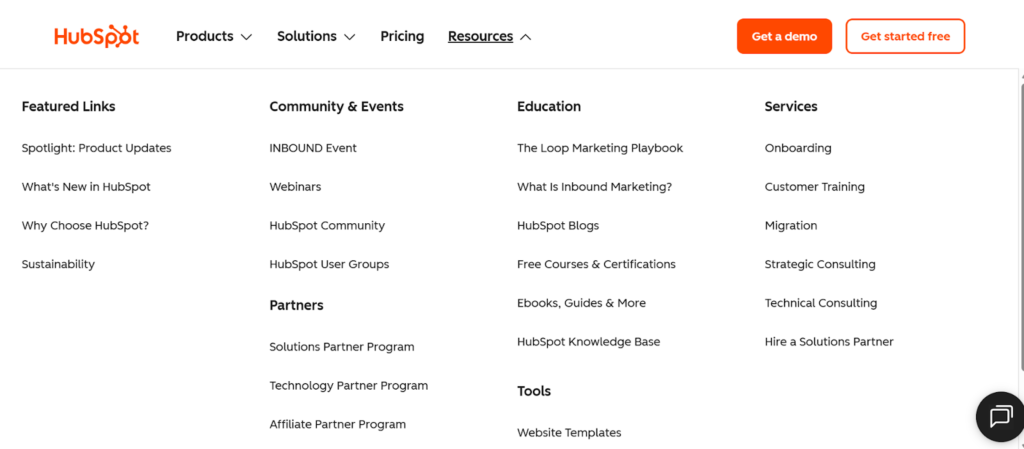
HubSpot: Owning the Inbound Marketing Conversation
First up is HubSpot, the brand that essentially turned the topic cluster model into an industry standard.
Back in the mid-2010s, HubSpot was already publishing hundreds of blog posts. The problem? Traffic wasn’t scaling with output. They had content everywhere, but not enough structure connecting it.
So they reorganised everything around core topic hubs. Instead of publishing isolated posts, HubSpot’s marketing team (led by researchers like Anum Hussain) identified a handful of primary themes like inbound marketing, technical SEO, email marketing, and sales, and built massive pillar pages for each one. They realised that as Google’s algorithms (like Hummingbird) got smarter, they began rewarding depth over density.
Each pillar worked like a table of contents. It covered the topic broadly, then linked out to deeper cluster articles (crawl budget, structured data, page speed, indexing, and so on). Internally, everything linked back to the pillar, and clusters linked to each other where relevant.
The structure looked simple. The impact wasn’t. Today, HubSpot ranks for millions of keywords and generates the majority of its traffic through organic content.
What makes this example interesting isn’t just scale – it’s discipline. HubSpot didn’t try to cover everything at once. They focused on owning conversations within specific marketing topics.
NerdWallet: Turning Topic Depth Into Search Dominance
Personal finance might be one of the most competitive niches on the internet. Brands like Forbes, Bankrate, The Motley Fool, and Credit Karma all compete for the same high-value keywords.
NerdWallet didn’t try to out-authority them overnight. Instead, they built topical depth.
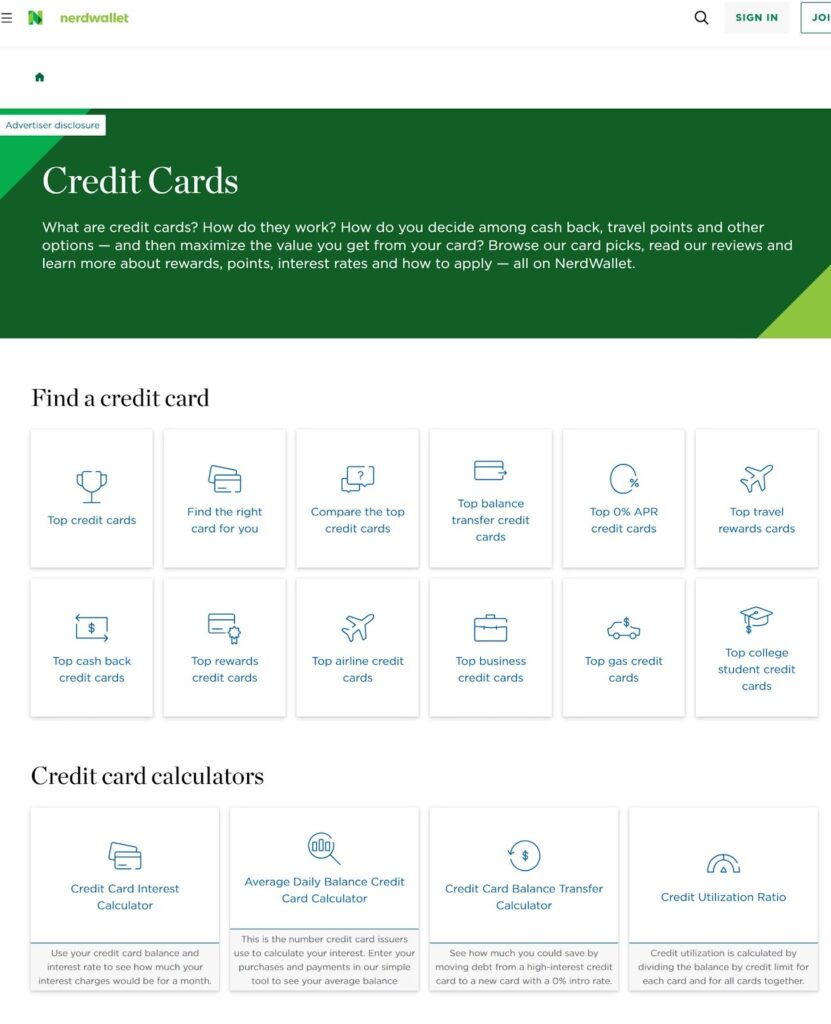
Their structure follows a classic hub-and-spoke model: large pillar pages for areas like credit cards, banking, loans, and investing, supported by hundreds of intent-driven cluster pages.
But here’s the twist: they mapped clusters directly to user decision stages.
Top-of-funnel content explains concepts (“How credit cards work”). Mid-funnel content compares options (“0% APR vs. low-interest cards”). Bottom-of-funnel content drives decisions (“Best cash back credit cards”).
They also leaned heavily into comparison and review content, making the site feel more like a decision engine than a blog.
To reinforce trust, NerdWallet invested heavily in editorial quality by hiring journalists from organisations like The Washington Post, The Wall Street Journal, and CNN.
The result is a content system that scales authority through both structure and credibility.
Shiprocket: Winning a Niche by Going Narrow First
Next is Shiprocket, a great example of topical authority done strategically in a regional market.
India’s logistics space is crowded with giants like Amazon Logistics, Flipkart, and Delhivery. Competing broadly on “logistics” would’ve been nearly impossible.
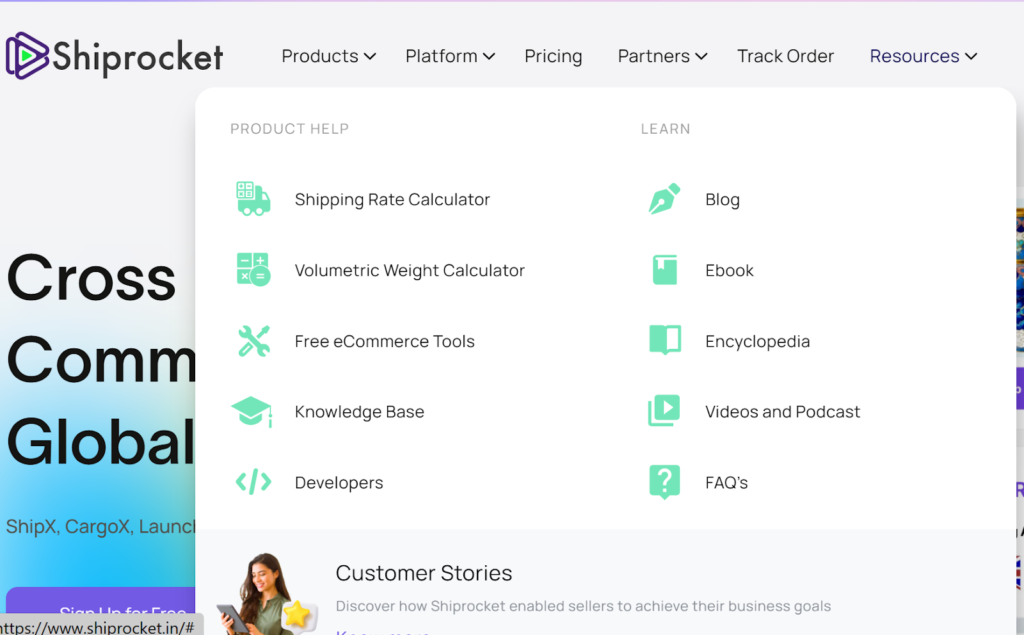
So Shiprocket narrowed the focus. Instead of logistics in general, they targeted e-commerce logistics for small D2C brands. Their blog became an education hub covering topics like shipping cost optimisation, COD returns, packaging workflows, regional delivery strategies, and cross-border fulfillment. They combined educational articles (e.g., Dos & Don’ts of eCommerce SEO) with tool-like content (calculators, how-tos) and used email to retain and convert readers.
Importantly, most of the content wasn’t promotional. It solved operational problems. That educational approach pulled in founders and operators searching for solutions, not just shipping providers.
Over time, the blog turned into a scalable acquisition channel, helping Shiprocket grow without relying heavily on paid ads.
So, if you serve a vertical market, write content that becomes a tool for your customers’ day-to-day operations, not only marketing theory.
HDFC ERGO General Insurance: Building Authority in a Regulated Industry
Topical authority becomes even more interesting in regulated industries like insurance. Products are complex. Compliance requirements are strict. And most companies historically relied on paid channels instead of organic education.
HDFC ERGO leaned into educational SEO instead.
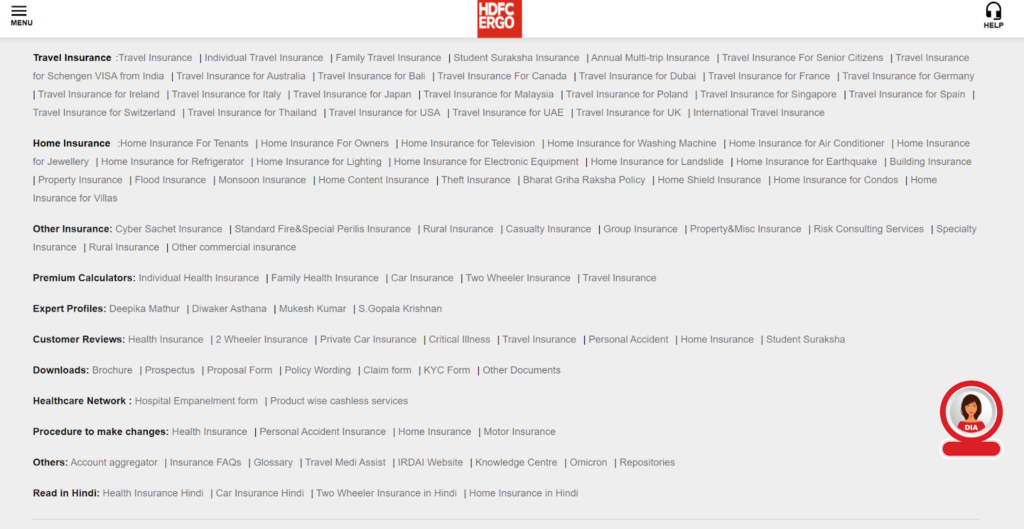
Working with Justwords, they created structured topic clusters around core insurance categories (health, travel, motor and home) and built supporting content answering every possible customer question.
Instead of pushing product pages immediately, they explained concepts first: What is copayment? How are premiums calculated? How do claims actually work?
They also added tools like calculators and comparison resources, which increased both engagement and trust.
In regulated niches, authority often comes from clarity, not just volume, and this approach reflects that.
What These Examples Have in Common
Different industries. Different scales. Different markets.
But the pattern is consistent:
- Clear core topics
- Structured pillar and cluster content
- Strong internal linking
- Educational depth before promotion
- Continuous updates over time
Topical authority isn’t built from publishing more; it’s built from publishing with structure.
Wrapping Up
Topical authority is not a campaign; it’s a productised content program. Your job as a team is to treat it as a system: research deeply, produce with quality controls, link editorially, measure outcomes, and defend positions with PR and partnerships.
You’ve read the theory in our main topical authority guide. If you follow this framework, you’ll create a stronger hub-spoke architecture that actually earns authority.
For brands trying to build topical authority at scale, the challenge is not writing; it’s building content systems. This is where a content-first agency like Justwords can help move from scattered content production to compounding content infrastructure.
Got a question on how you can build topical authority in your niche? Contact us.
Further Reading: 2026 Content Flywheel Strategy: How to Repurpose Content
FAQs
You’ll see meaningful progress in 6–12 months. Expect initial visible gains in 3–6 months if you publish quality pillars and 8–12 clusters and execute outreach.
Yes. Backlinko with just 1 person outranked Moz on “link building.” NerdWallet (startup) outranked Forbes on “best credit cards.” Focus on depth in a narrow niche can help small sites beat big brands.
It’s not a number game. Aim for quality coverage: cover all top intents for the topic thoroughly. For most niches, a pillar with 8–20 clusters is a practical first wave.
Yes, pillars act as the hub that signals coverage and houses the canonical resource for users and search engines.
Audit for overlap, redirect or merge similar posts, and link existing basic explainers to the new pillar as the canonical resource.
Use AI for outlines and research, but prioritise human editing and expert authorship to meet E-E-A-T standards. Human expertise creates the insights, examples, and original data that build authority.
Old sites may have backlink equity, but new sites can win niches via signature assets, original data, and focus. The barrier is lower if your content solves real tasks.
Track the number of unique intents covered, share of SERP positions across topic cluster, and backlinks to the pillar.