Seth Godin’s often-quoted line that content marketing is “the only marketing left” has aged well. Modern marketing is no longer driven by disruptive, attention-grabbing ads. It’s about the genuine story your brand communicates through meaningful and valuable content.
In 2026, worldwide content marketing revenue is projected to reach $107.5 billion. But that also means more content is being produced than ever before, which means format choice and quality matter more to stand out. Publishing the wrong format for your audience wastes the effort before even a single person reads it.
Blogs, videos, podcasts, case studies, and user-generated content (UGC) are among the most effective content formats used today to reach, engage, and convert a target audience. Choosing the right format is not about what is trending; it is about what matches your audience, your goals, your distribution channels and your production capacity.
That’s why in this guide we cover the 12 most effective content marketing formats in 2026, when to use each one, and how to choose the right format for your marketing strategy.
TL;DR
- The most effective content marketing formats in 2026 include blogs, videos, email newsletters, case studies, podcasts, and UGC.
- The best format depends on your audience, goals, distribution channels, and production capacity.
- Short-form video drives the highest reach and engagement, while email delivers the highest ROI.
- Blogs remain the strongest format for SEO, organic traffic, and lead generation.
Case studies and UGC are especially effective for building trust and driving conversions.
Before You Pick a Format: Three Things to Get Right
1. Know Your Audience
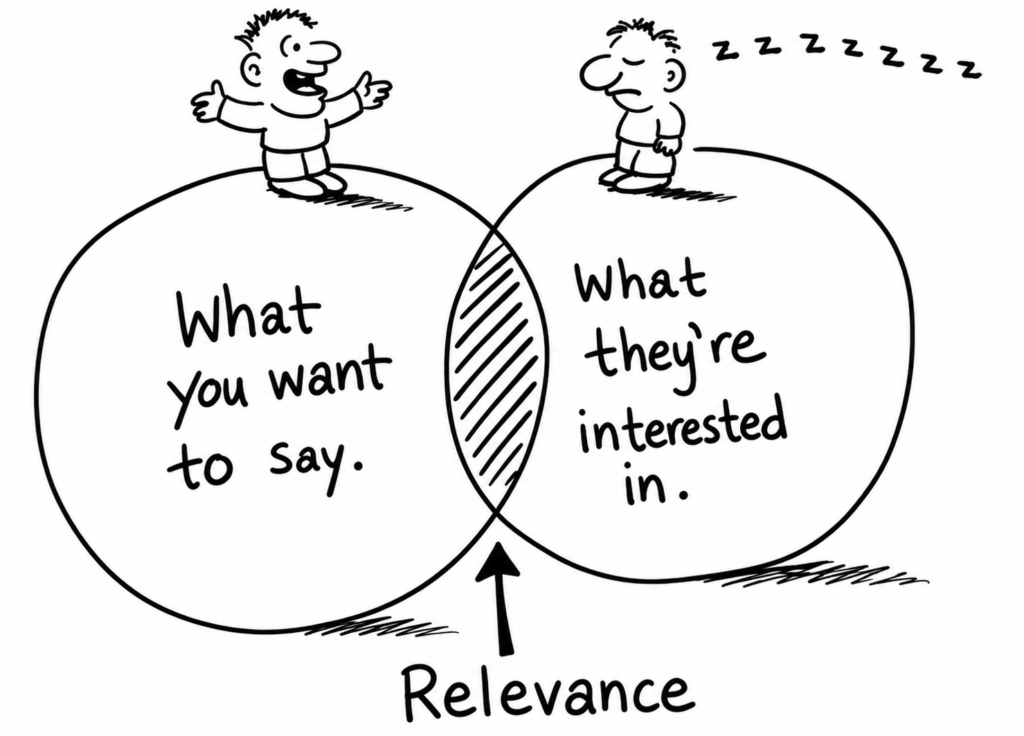
Different content formats attract a different kind of audience. Someone who reads a 3,000-word whitepaper on a B2B SaaS topic has a fundamentally different attention profile from someone discovering a brand through a 30-second Reel. The same person may engage with both formats but at different stages of the buying journey and with different expectations.
Three ways to understand your audience before choosing a format:
- Collect demographic data: Age, location, job title, industry, and device usage all influence which formats your audience gravitates toward. A B2B audience of senior decision-makers in manufacturing is far more likely to engage with a structured white paper or webinar than an Instagram carousel. A D2C beauty brand targeting 22-year-olds is the opposite.
- Collect direct feedback: If you have an existing audience, ask them. A simple survey or poll, even on social media, about what type of content they find most useful will tell you more than any benchmark report.
- Build audience personas: Document who your ideal customer is, what problems they face, how they prefer to consume information, and where they spend time online. This is the reference point every content format decision should come back to.
2. Align Formats With Business Goals
Every content format serves certain goals better than others. Be specific about what you want each piece of content to achieve:
- Brand awareness: Reach as many relevant people as possible (short-form video, social content, podcasts).
- Organic traffic and SEO: Rank on Google and AI search tools (blogs, long-form guides, FAQs).
- Lead generation: Capture contact information or intent (white papers, webinars, templates, checklists).
- Conversion and purchase decisions: Move near-ready buyers to act (case studies, comparison pages, testimonials, demos).
- Retention and loyalty: Keep existing customers engaged (newsletters, communities, exclusive content).
Trying to achieve all goals with one format is how content strategies lose focus.
3. Define Your KPIs Before You Publish
KPIs (Key Performance Indicators) are the metrics that tell you whether a content format is working for your specific goal. Define them before you publish.
If your goal is brand awareness through short-form video, your KPI might be reach and watch time. If your goal is lead generation through a white paper, it is downloads and the quality of leads who requested it. If you are publishing case studies to support conversion, track whether pages with case studies convert at a higher rate than those without.
Without pre-defined KPIs, every content format seems to work, but none of them can be improved.
The 12 Content Marketing Formats (With 2026 Performance Data)
1. Blog Posts and Long-Form Articles for SEO
Blogs remain one of the most versatile and highest-ROI content formats available. B2B companies with blogs generate roughly 67% more leads per month than those without, and websites with active blogs have 434% more indexed pages, creating more keyword-ranking entry points across the funnel.
Blog posts are among the top five highest-ROI content formats and among the top five formats marketers plan to invest most in for 2026.
What has changed: The average blog post length that ranks well has actually been declining. The average blog post length in 2025 was approximately 1,333 to 1,350 words, decreasing for the second consecutive year. This does not mean shorter is better; it means that comprehensive, specific, and well-structured content beats bloated posts padded with generic information. Quality and relevance consistently outperform word count.
Blogs work best for: SEO and organic search traffic, establishing topical authority, supporting the full funnel from awareness to conversion.
What makes a blog work in 2026: Structure content to answer specific questions directly. This is what gets featured in Google’s AI Overviews and “People Also Ask” sections. Use original data, real examples, and genuine expertise. Generic content that recaps what five other sites already cover ranks poorly and converts worse.
2. Short-Form Video
Short-form video such as Reels, YouTube Shorts, and LinkedIn video is now the highest-performing content format by reach and engagement across almost every audience segment. Short-form video ranked as the most popular content format used by marketers in 2025, cited by 60% of respondents. According to HubSpot, short-form video is among the top five content formats marketers will invest most in for 2026.
The reason is algorithmic. Platforms like Instagram, YouTube, and LinkedIn actively push short-form video to non-followers, making it the single most powerful format for organic discovery. A blog post reaches people who find it through search; a Reel reaches people who did not know you existed.
Short-form video works best for: Brand awareness, audience growth, product demonstrations, humanising your brand, and reaching audiences who do not read.
What makes short-form video work in 2026: Hook within the first three seconds. Add captions because a large share of users watch without sound. Prioritise watch time over likes, as the algorithm measures how long people stay, not just whether they tap the heart. Finally, consistency matters more than virality.
3. Long-Form Video
Long-form video (YouTube tutorials, product walkthroughs, thought leadership pieces) occupies a different space from short-form. While short-form drives discovery, long-form builds depth of relationship. Long-form video was used by 38% of marketers in 2025 and ranks among the top five formats planned for investment in 2026.
YouTube remains the platform of choice for long-form video, and it doubles as a search engine. That means long-form videos can rank for keywords just like blog posts, but with the additional advantage of showing up in Google video results.
Long-form video works best for: In-depth tutorials, product demos, expert interviews, and webinar-style educational content.
What makes long-form video work: Production quality matters more here than in short-form. A rambling 20-minute video with no clear structure loses viewers fast. Script it. Structure it into clear chapters. And give viewers a reason to stay.
4. Infographics and Visual Content
Infographics package information in a visually scannable format, making them ideal for data-heavy topics, process explanations, and comparisons. They are also historically strong at attracting backlinks. Other sites readily link to a well-designed infographic rather than reproducing the information.
What has changed: The landscape for static infographics has become crowded, and attention thresholds have dropped. In 2026, interactive infographics, where users can click, filter, or explore data, significantly outperform static versions in engagement and time-on-page. If you are investing in infographic production, consider the interactive version.
Infographics work best for: Communicating data or processes, earning backlinks, social sharing, and breaking up long-form written content.
5. Podcasts
Podcasts have moved well past the experimental stage. In 2025, 61% of B2B marketers (and 41% of B2C marketers) used audio platforms, such as podcasts, to increase the accessibility and personalisation of content delivery. Branded podcasts can increase brand favourability by 14%, and 38% of listeners have purchased a product based on a podcast ad.
The “on-the-go” advantage is real. Podcasts reach audiences during commutes, workouts, and tasks where no other content format can. They also build an unusually loyal audience – regular listeners develop a relationship with hosts that creates strong brand affinity over time.
Podcasts work best for: Thought leadership, community building, reaching busy professional audiences, and long-term brand building.
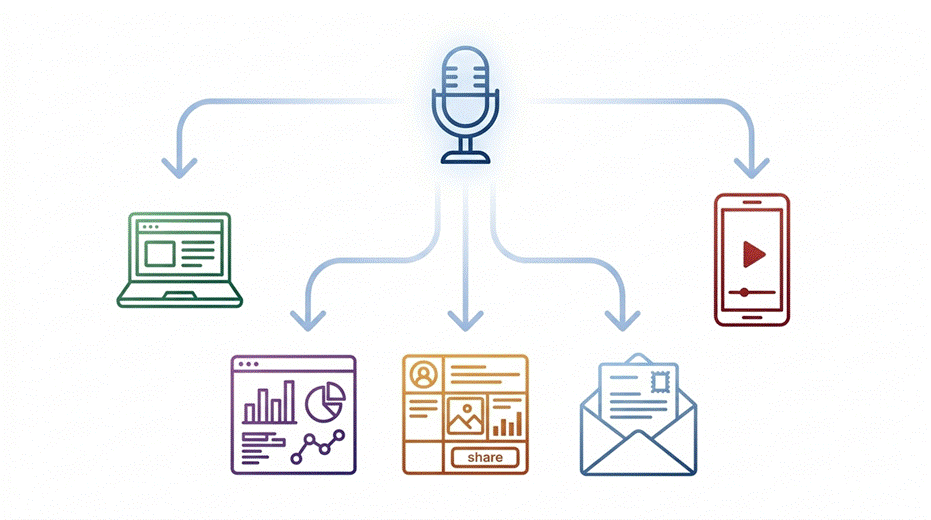
An important content efficiency note: A single podcast episode can be repurposed into a blog post, a set of short-form video clips, a LinkedIn article, and several social posts. Podcast production has one of the highest repurposing yields of any content format.
6. Email Newsletters
Email is the most underrated content format in most businesses’ strategies. 71% of B2B marketers still use email newsletters as part of their content strategy. And the ROI for email marketing averages $42 for every $1 spent, outperforming most other channels. Among B2C consumers, more than half say email marketing influences their purchasing decisions.
Unlike social media, email reaches people directly. No algorithm determines whether your newsletter gets seen. The people on your list have actively chosen to hear from you, which makes email one of the highest-intent channels available.
What has changed: Newsletters have undergone a significant resurgence. Substack-style editorial newsletters (opinionated, personal, consistently valuable) are outperforming promotional email blasts by a wide margin. 77% of B2B marketing teams say instructive and personalised email content performs best. Readers want to learn something, not be sold to.
Email works best for: Lead nurturing, audience retention, driving repeat traffic to new content, and converting warm leads at the bottom of the funnel.
7. White Papers, E-books, and Webinars
Long-form gated content, such as white papers, e-books and webinars, remains one of the most effective lead generation tools in B2B content marketing because it attracts people who are serious enough to exchange their contact details for it.
Webinars were the second most effective distribution channel in 2025, used by 51% of marketers. The live component creates genuine engagement that recorded content rarely matches because people ask questions, participate in polls, and stay for the full session.
White papers work best when they go deep on one specific problem, include original data or proprietary insights, and are written for a decision-maker audience rather than a general one. 86% of marketers plan to increase research budgets in 2026, with those publishing original data reporting higher conversion rates (64%) and stronger SEO performance (61%).
Long-form gated content works best for: B2B lead generation, establishing subject matter authority, supporting sales conversations, and mid-funnel nurturing.
8. Case Studies
Case studies and customer success stories were the most popular content type in 2026, used by 41% of marketers, and there is a clear reason for this. A case study is the most credible piece of content you can produce, because it shifts the persuasion from you to a satisfied customer. You are not claiming your product works; a real client with real results is proving it.
Case studies work especially well at the bottom of the funnel, when a prospect is comparing you against a competitor and looking for evidence that you deliver.
What makes a case study work: Specificity. Name the client (or the industry if anonymisation is needed). State the problem clearly. Quantify the result. “We increased qualified leads by 3x in 5 months for a B2B SaaS company in the logistics space” is a case study. “We helped a client grow their business” is not.
Case studies work best for: BOFU conversion content, supporting sales conversations, demonstrating expertise in specific industries or use cases.
9. User-Generated Content (UGC) and Social Proof
UGC (reviews, testimonials, customer photos, unboxing videos, community posts) is experiencing a significant performance surge in 2026. UGC-driven conversions increased from 4.27x in Q4 2025 to 6.73x in Q1 2026, a 57% increase quarter-over-quarter. Website pages featuring UGC saw 4.11x more visits than those without it.
The reason UGC outperforms branded content in trust metrics is straightforward: people trust other people more than they trust brands. UGC now influences purchasing decisions for 84.3% of consumers globally.
How to generate UGC actively: Encourage reviews on Google and industry platforms, run campaigns that invite customers to share their experience, feature customer stories on your website and social channels, and work with nano- and micro-influencers who speak to specific communities.
UGC works best for: Building trust, supporting purchase decisions, social proof on product and landing pages, and social media engagement.

10. Checklists, Templates, and Cheat Sheets
These are among the most underused formats in most content strategies, and among the highest-converting. The reason is simple: they offer immediate, tangible value. A checklist solves a specific problem the moment someone downloads it, which is why people are willing to give an email address for them.
They also spread organically. When someone uses your template or shares your checklist, your brand travels with it. Adding a subtle brand mark ensures that every share is a visibility event.
These formats work best for: lead generation, email list building, and reaching audiences at the consideration stage who want practical help rather than education.
Quick tip: The most effective versions of these are increasingly interactive – fillable PDFs, digital checklists that can be saved and checked off, and templates that work inside tools people already use (Notion, Google Sheets, Canva). Static PDFs still work, but interactive versions convert better.
11. Quizzes, Polls, and Interactive Content
Interactive content asks the audience to do something, not just read or watch. That active participation drives significantly higher engagement and time-on-page than passive content. Quizzes, assessments, calculators, polls, and configurators all fall into this category.
For B2B brands, ROI calculators and self-assessment tools are particularly effective. They give prospects a personalised output (their likely ROI, readiness score, and recommended plan) which immediately makes the tool feel relevant. These also generate useful data about your audience that informs future content and sales conversations.
Interactive content works best for: Lead generation (results require an email), audience engagement, and personalised buyer journeys.

12. Slide Decks and Presentations
Slide decks are a versatile format most businesses under-publish. They work well for summarising complex information visually, explaining processes, and presenting data in a scannable way. Published on LinkedIn or SlideShare, they can reach a professional audience that does not engage with video or long-form articles.
Internally, well-structured slide decks also serve as sales enablement tools – content the sales team can send to prospects to explain a process, compare options, or demonstrate an approach.
Keep them clean: Minimal text per slide, strong visual hierarchy, and a logical flow from problem to solution. Slide decks that try to pack in too much information fail as both a communication tool and a marketing asset.
Slide decks work best for: B2B thought leadership, LinkedIn content, sales support, and conference or speaking contexts.
Creating a Content Marketing Strategy: How to Choose the Right Format
Rather than picking formats based on what competitors are doing or what seems popular, work through these four questions:
1. Where is my audience in the buying journey?
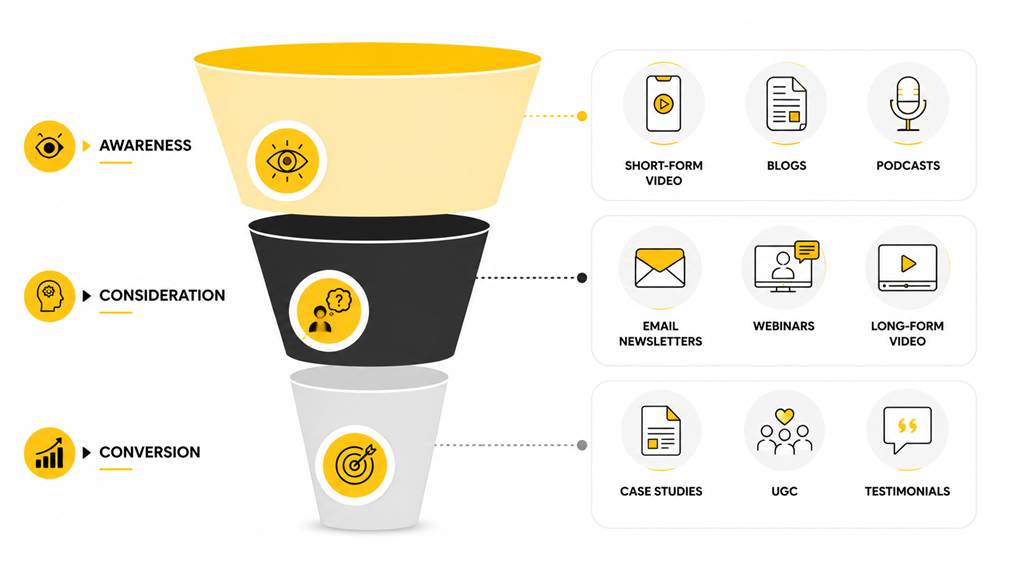
- Early stage (just becoming aware): short-form video, blogs, social content, podcasts
- Middle stage (evaluating options): webinars, long-form guides, email newsletters, comparison content
- Late stage (ready to decide): case studies, testimonials, demos, UGC
2. What platform does my audience use most?
Format and platform are inseparable. A white paper is wrong for Instagram. A short Reel is not the best for a senior B2B decision-maker on LinkedIn. Match the format to where your audience actually spends time.
3. What can I produce consistently?
The best content format you never publish is worthless. Choose formats you can actually sustain. A weekly newsletter you can maintain is better than an ambitious video series you abandon after three episodes.
4. What is my goal for this piece?
Awareness, traffic, leads, conversion, or retention – map the format to the goal.
One thing to note: The rise of AI has changed production economics, but not format strategy. AI tools have made it significantly cheaper and faster to produce blogs, newsletters, scripts, and other formats. But format choice still depends on audience and goal, and AI does not change that logic.
Wrapping Up
Choosing the right content marketing format is less about following trends and more about understanding what works for your audience. While blogs, videos, podcasts, case studies, email newsletters, and UGC are among the most effective formats today, not every format will be right for every business.
Start with your audience, goals, and resources, then focus on the formats you can create consistently and improve over time. Content formats will continue to evolve, but one thing remains constant: content that is useful, relevant, and genuinely valuable will always perform better than content created just to fill a calendar.
Need help choosing and executing the right content marketing formats for your business? Talk to us to understand how our content marketing services can help.
FAQs
1. Which content marketing format is the best in 2026?
Email marketing delivers the highest measurable ROI at $42 for every $1 spent. Short-form video delivers the highest reach and organic discovery. Case studies and UGC deliver the highest conversion impact at the bottom of the funnel. The best format depends entirely on what you are trying to achieve.
2. How many content formats should a business use?
Start with two or three formats that match your audience and goals, do them well, and build from there. Most businesses underperform because they spread themselves across too many without doing any of them consistently well.
3. Are blogs still worth investing in for 2026?
Yes. Blogs generate 67% more leads per month for businesses that publish them versus those that don’t. The format has not declined; the quality bar has risen. A well-researched, specific, genuinely useful blog post still ranks, converts, and builds authority.
4. What is the difference between a content format and a content channel?
A format is the type of content (blog post, video, podcast). A channel is where it is distributed (website, YouTube, LinkedIn, email). The same format can be distributed across multiple channels. For example, a case study can live on your website, be shared on LinkedIn, be referenced in a sales email, and be turned into a short-form video. Formats and channels are separate decisions.
5. Which content formats work best for B2B businesses in India?
Long-form blogs and case studies perform strongly for Indian B2B audiences, particularly when they speak to industry-specific problems. WhatsApp-friendly content (short videos, infographics, PDF guides) has become increasingly effective for reaching decision-makers in tier-2 markets. LinkedIn video and thought leadership articles are growing fast among senior B2B buyers. Webinars continue to generate strong lead quality for complex B2B offerings.