
Most businesses know they need content marketing. Fewer know which type of content to actually invest in.
The options have multiplied. Blogs, videos, podcasts, infographics, case studies, testimonials, whitepapers, influencer content, and email each promise results. Each has a different cost, a different learning curve, and a different place in the buyer journey. That’s why choosing the wrong one at the wrong stage is a waste of budget that compounds over time.
This guide cuts through that. It covers the 9 most effective types of content marketing, what each format actually does for your business, and, critically, where in the buyer journey each one belongs.
Key Takeaways
- Different content types serve different purposes, from building awareness to driving conversions and customer retention.
- Blogs, videos, podcasts, infographics, case studies, whitepapers, influencers, and email each play a unique role in the buyer journey.
- The best content strategy focuses on your biggest business gap instead of trying every format at once.
- Combining multiple content formats across the marketing funnel delivers stronger long-term business results.
- Start with one or two high-impact formats, measure performance, and expand your strategy as you grow.
First: What Is Content Marketing?
Content marketing is the practice of creating and distributing useful, relevant content to attract a specific audience with the goal of driving profitable action over time.
The emphasis is on “over time”. Content marketing is not advertising. Advertising interrupts; content marketing earns attention by offering something genuinely useful.
A beauty brand running ads is interrupting the viewer. A beauty brand teaching its audience how to pick the right foundation shade for their skin tone, as Nykaa does across its blog and Instagram, is doing content marketing.
The distinction matters because it changes what you measure. Content marketing builds compounding assets. A blog post that ranks on Google today will drive traffic for years. An ad stops the moment you stop paying.
How to Think About Content Types: The Funnel Framework
Before choosing which content type to invest in, you need to know where your gap is. Different content formats serve different stages of the buyer journey:
| Funnel Stage | What the Buyer Needs | Best Content Types |
| Awareness (TOFU) | Education, discovery | Blog posts, short-form video, infographics, podcasts |
| Consideration (MOFU) | Comparison, deeper information | Long-form articles, whitepapers, webinars, case studies |
| Decision (BOFU) | Proof, reassurance, final push | Testimonials, case studies, product demos, exclusive offers |
| Retention | Continued value, relationship | Email newsletters, community content, tutorials |
One thing to remember: Most businesses over-invest in awareness content and under-invest in conversion and retention content. But the most profitable content programmes cover all four stages systematically.
9 Types of Content Marketing (and What Each One Actually Does)
1. Blog Content
Blogging is the foundation of most content marketing strategies, and for good reason. According to HubSpot, businesses with active blogs generate 55% more website visitors on average than those that don’t. And nearly 50% of B2B buyers read a company’s blog when evaluating a purchase decision.
A blog is one of the low-cost ways to increase organic traffic to your website. Creating blog content that educates your audience about the services/products you offer and the value they eventually get from consuming them creates brand loyalty.
For example, say you run a home decor brand. Writing blog posts on topics like how to decorate your room on a budget, DIY wall decor, and things to keep in mind while buying home decor will help you catch the attention of audiences looking for inspiration and can turn into potential customers.
The average blog post today stands at 1,427 words. That’s over 70% longer than a decade ago. That growth reflects a simple truth: shallow content no longer ranks. Google’s Helpful Content system rewards depth, expertise, and genuine utility. A 500-word post covering the surface of a topic will be outranked by a well-researched 1,500-word piece that actually helps the reader.
Where it works best: Primarily awareness and consideration. Blog posts answer the questions your target audience types into Google before they know they need you. Done right, they also function as bottom-of-funnel conversion tools when they cover comparison, pricing, or implementation topics.
What to get right:
- Build around keyword research rather than gut instinct. Write about what people are searching for.
- Use the pillar-cluster model: one comprehensive pillar page on a core topic, supported by related cluster posts. This structure earns more authority than isolated articles.
- Be consistent. A blog that publishes twice a month and holds to it outperforms one that publishes 10 posts in January and goes quiet until April.
- Guest blogging extends your reach beyond your own audience. Publishing on credible, relevant publications builds backlinks and positions you as a thought leader in your space.
Press Squeeze Magazine is one such inspiration to look at when it comes to creating holistic blog posts for your website. Their content not only revolves around healthy eating (they offer cold-pressed juices and juice cleanses) but also healthy living. Their content ranges from giving information about workout clothes to suggesting healthy places to eat while travelling, all while keeping their primary focus on creating content around healthy eating.
From our experience at Justwords, the single most common mistake we see in client blogs is publishing without a keyword strategy. Well-written content that no one is searching for earns very little traffic. Every post should start with a clear, researched keyword target and a defined funnel stage. That’s why SEO and content marketing should run together.

2. Video Content
Video has moved from “nice to have” to non-negotiable. In 2026, 91% of businesses use video as a marketing tool, according to HubSpot. Further, 95% of video marketers say it is an important part of their overall strategy. Video increases website traffic and helps generate leads.
Short-form video is where the ROI is highest right now. Platforms like Instagram Reels, YouTube Shorts, and TikTok have established a consumption pattern, particularly among younger audiences. This rewards content that delivers its value in under 60 seconds. Nearly three-quarters of B2B marketers identified short-form video as delivering the highest ROI of any content format in a late 2024 survey.
That does not mean long-form video is dead. YouTube tutorials, product walkthroughs, webinar recordings, and founder interviews all serve different purposes at different funnel stages. The key is matching format length to intent.
Humans of Bombay, for example, was a picture storytelling page for a long time. However, they quickly jumped on the Reel trend, and one can clearly see the increase in their likes. When you compare their post and video content posted on the same day, you will see their video generated more likes and comments compared to the picture content.
Where it works best: All funnel stages, depending on format. Short-form video drives awareness and discovery. Product demos and explainers serve consideration. Testimonial videos and case study walkthroughs close sales.
What to get right:
- The first three seconds determine whether someone watches or scrolls. Lead with the hook, not the preamble.
- Optimise for mute. Most social video is watched without sound. Use captions and on-screen text.
- Content marketers often agree that the optimal video length for achieving a marketing goal is between 1–3 minutes. Match length to platform and purpose.
- Real footage of your team, clients, and product consistently outperforms polished stock-heavy productions.
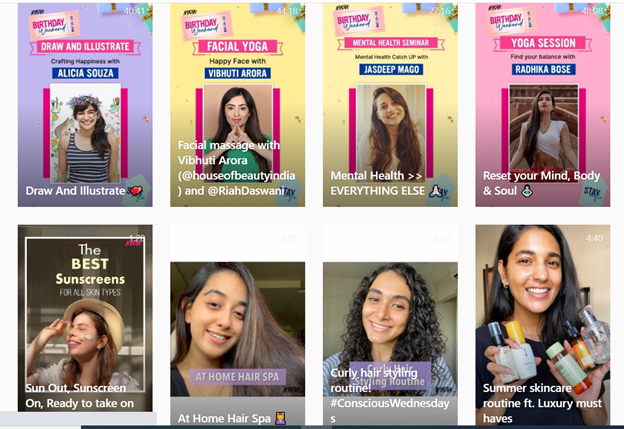
You can see how Nykaa uses video content to drive engagement.
3. Podcasts
Podcasts have crossed from early adopter territory into mainstream consumption. According to Backlinko, over 619 million people worldwide listen to podcasts as of 2026, a number growing at nearly 7% year-on-year. In the US, 46% of weekly listeners, according to Edison Research, have purchased a product after hearing about it in one.
For brands, the podcast opportunity is not just about starting your own show. Appearing as a guest on relevant podcasts in your niche is one of the fastest ways to access an engaged, pre-qualified audience. A well-placed guest appearance on a podcast your ideal customers already listen to delivers far more qualified exposure than most paid advertising.
Starting your own podcast requires more sustained investment, but the returns compound. It builds a direct relationship with listeners and establishes genuine authority through in-depth conversations. And, crucially, it creates content that can be repurposed into blog posts, social clips, email content, and quote graphics.
Where it works best: Awareness and consideration. Podcasts rarely drive immediate conversions, but they build the kind of ongoing trust that shortens sales cycles significantly.
What to get right:
- New podcasts should start with 5-minute episodes to establish the format before extending to the 15–30 minute sweet spot.
- Talk about things you genuinely know and care about. Generic content is immediately obvious to podcast listeners.
- Invite guests who bring credibility and their own audiences. This is the fastest organic growth channel for new shows.
- Repurpose every episode systematically: audiograms, transcript-based blog posts, quote clips for social.
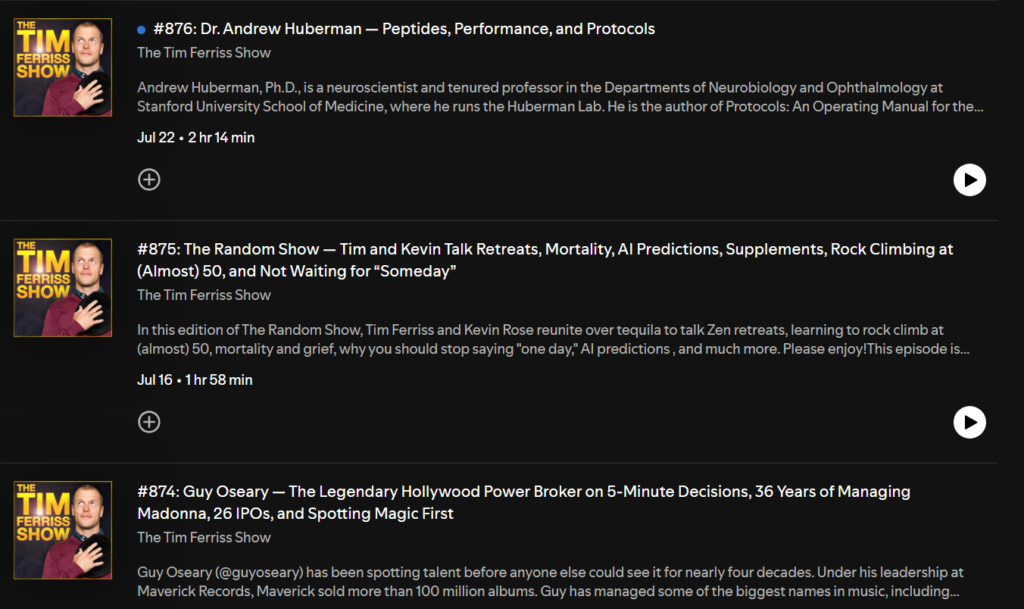
The Tim Ferriss Show by Tim Ferriss is one such podcast that has been immensely successful. It generated millions of downloads and has won the award for #1 business podcast. The podcast involves him discussing strategies, tools, and tactics to grow a business.
4. Infographics
Infographics are way more likely to be read than articles, and posts with visuals have a much higher engagement rate than text-only content. That’s why infographics remain one of the highest-performing content formats for backlink acquisition and social sharing.
The format works because it does two things at once: it presents data or complex information visually (faster to process, easier to remember) and it creates a standalone asset that other websites and social accounts want to share and link to.
Where it works best: Awareness and consideration. Infographics perform best when they simplify a complex topic, present compelling data, or visualise a process that would take paragraphs to explain in text.
What to get right:
- The data and the story matter more than the design. An infographic with weak insights and beautiful design is less shareable than one with strong original data and clean presentation.
- Keep it focused. One clear theme instead of a dump of everything you know about a topic.
- White space is not wasted space. Overcrowded infographics are harder to read and less likely to be shared.
- Original data consistently earns more links than curated data. If you can survey your own audience or analyse your own client data, do it.
5. Case Studies
Case studies are the most powerful conversion tool in content marketing. B2B marketers report a 70% effectiveness rate for case studies in their campaigns, and 82% of SaaS companies use the challenge/solution/results format specifically. The reason is simple: a case study is proof, not a promise.
A well-executed case study does something your sales team cannot do alone. It allows a potential customer to see themselves in your work. It helps them recognise their own problem in someone else’s situation and watch it get solved. That vicarious experience accelerates buying decisions significantly.
Where it works best: Bottom of funnel. Case studies are most effective when the prospect is comparing you against a competitor or needs final reassurance before committing.
What to get right:
- Write about clients your ideal customers will recognise and relate to. A case study about a company that looks nothing like your prospect does limited work.
- Show the entire journey: the problem before, the process during, the outcome after. Real numbers make it credible.
- Produce case studies in multiple formats: a long-form written version for the website, a short video for social, a slide deck for sales conversations. Different formats serve different moments in the buyer’s journey.
- Get specific about your strategy. Vague case studies (“we improved their content marketing”) are unconvincing. Specific ones (“we restructured their blog architecture, targeted 40 new keywords, and built a distribution plan”) build genuine confidence.
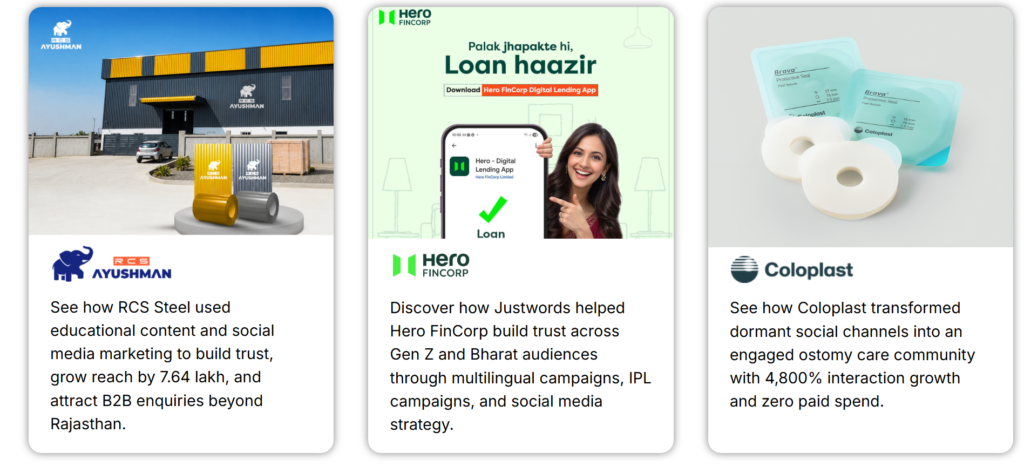
Here are a few examples of case studies done by Justwords.
6. Testimonials and Customer Reviews
Most customers read online reviews before making a purchase decision. People under 35 often trust online reviews as much as personal recommendations from friends and family. Click-through rates increase when reviews are present. These make customer reviews one of the highest-leverage, lowest-cost content assets any business can build.
The distinction between testimonials and reviews is worth drawing. A testimonial is a curated, usually longer-form endorsement you gather directly from a client. It’s ideal for your website, sales decks, and landing pages. A review is what customers leave independently on Google, Trustpilot, Clutch, or industry-specific platforms. And its independence is precisely what makes it more trusted.
Where it works best: Bottom of funnel, primarily. But distributing reviews and testimonials at the awareness stage (in social media posts, ads, and blog content) also builds brand credibility before a prospect is even in buying mode.
What to get right:
- Include names, designations, and company names wherever possible. Anonymous testimonials carry much less weight than attributed ones.
- Respond to every review, whether positive or negative. Your response is as visible as the review itself, and thoughtful responses to negative feedback build trust rather than eroding it.
- Make it easy for satisfied customers to leave reviews. A direct link to your Google Business Profile, Clutch page, or G2 listing, sent at the right moment (shortly after a successful project), is all it takes.
- Use specific quotes in your marketing. A quote that describes a specific outcome (“They increased our leads by 3x in four months”) outperforms a generic one (“Great team to work with”).
7. White Papers and Long-Form Reports
White papers are the credibility currency of B2B content marketing. A well-researched white paper establishes genuine authority on a complex topic, builds your email list (they work exceptionally well as gated lead magnets), and influences buying decisions at the consideration stage. B2B buyers often share white papers with colleagues, which extends your reach beyond the single reader.
The bar for a white paper is higher than for a blog post. It should involve original research, a clearly defined problem, an evidence-based solution, and a level of depth that positions your brand as genuinely expert. If it reads like a long blog post with a fancy cover, it is not a white paper.
Where it works best: Consideration stage for B2B buyers who need to justify a decision internally or who are evaluating complex solutions.
What to get right:
- Write only on topics you are genuinely qualified to address with depth. Authority is the entire point of the format.
- Include original data where possible. A white paper with proprietary research is exponentially more valuable than one that curates publicly available information.
- Design matters. White papers are often shared with decision-makers who will judge the brand by how the document looks. Invest in professional layout.
- Don’t make it a sales pitch. The minute it reads like a brochure, it loses all credibility.
Tableau’s white paper strategy involves combining material from many sources. Their own white paper published in the resource section also includes papers from Forrester, Gartner, and The Economist. It also includes publications about common tools its clients use, like Salesforce. This approach is a more honest reflection of how their clients do business.
8. Influencer Marketing
Influencer marketing has matured significantly. The ROI averages $5.78 for every dollar invested, and 92% of brands plan to increase their investment in content creators. But the era of chasing follower counts is over.
What works in 2026 is strategic alignment. That means finding creators whose audiences genuinely overlap with your customers, and building partnerships that feel natural rather than transactional.
Micro-influencers (typically 10,000 to 100,000 followers) consistently outperform macro-influencers on a cost-per-engagement basis. Their audiences are more specific, more trusting, and more likely to act on recommendations. A niche creator with 15,000 highly engaged followers in your exact category will deliver better results than a celebrity with 2 million followers who happen to include some of your target audience.
Where it works best: Awareness and consideration. Influencer content works best at the top of the funnel – building familiarity and trust before a potential customer has even started actively searching for your product.
What to get right:
- Check engagement rate, not just follower count. An account with 50,000 followers and a 0.1% engagement rate has a less active audience than one with 10,000 followers and a 4% rate.
- Make sure their audience is your audience. Reach is irrelevant if it is reaching the wrong people.
- Give creators genuine creative freedom. Audiences can identify heavily scripted influencer content immediately, and it erodes trust in both the creator and the brand.
- Measure beyond likes. Track referral traffic, discount code redemptions, and sign-ups directly attributable to each creator partnership.

9. Email and Newsletter Content
Email is the most underrated content format in marketing. It generates among the highest ROI of any channel, and unlike social media, your email list is an audience you own. No algorithm can reduce your reach overnight. No platform change can make your content invisible.
Email is particularly powerful for retention and nurturing. It keeps your brand present with an audience that has already expressed interest, and it delivers content directly rather than competing for attention in a crowded feed. Business and finance emails average a 31.35% open rate, which is far higher than average social media reach for most brands.
In 2026, the most effective email content strategies move beyond promotional broadcasts. The brands building the most loyal audiences are those that treat their newsletters as genuine editorial products that consistently deliver value, build a voice, and make subscribers feel like insiders.
Where it works best: All funnel stages, but most powerful at consideration and retention. Email keeps you present with people who are evaluating you and maintains relationships with customers who have already bought.
What to get right:
- Your subject line determines whether the email gets opened. Treat it with the same care as a headline. Curiosity, specificity, and utility consistently outperform clickbait.
- Keep copy short and purposeful. One clear purpose per email, one clear CTA. Multiple competing links reduce click-through rates.
- Segment your list. A new subscriber who just downloaded a whitepaper needs different content than a client of three years. Relevant emails perform significantly better than broadcast-to-all sends.
- Do not spam. 2–3 emails per week is the maximum for most audiences. Frequency fatigue is real, and it kills unsubscribe rates.
Charity Water, an NGO, took a unique approach to email marketing and increased its donations by $800,000. Instead of just thanking their customers for the donation, they chose to involve their donors in the entire process. Donors could see where their funds were being used and how they impacted people’s lives, which helped them raise $30 million in the 2013 campaign.
The takeaway here is to create relationships with your customers to turn them into repeat customers. Make your email marketing efforts more than just selling your products or services; concentrate on building relationships, and it will yield amazing results.
4 Benefits of Content Marketing
1. Increases Search Engine Visibility
Every new post you add to your website is another page that Google will index. This will help you rank higher on Google, leading to more organic traffic to your website. Creating user-friendly, quality content can increase your domain authority in Google. Blogging and guest blogging are some of the best ways for SEO.
2. Will Make Customers Stick Around for a Longer Time
The more helpful content you have on your website, the more likely your customers will stick around, and the longer they stay, the more likely your content is to influence their purchase decision.
3. Higher Traffic from Referrals
Influencer marketing campaigns and guest blogging efforts can drive referral traffic your way. Referral traffic is generally easier to convert, as they already have a positive image of your brand because someone they trust suggested it.
4. Increase in Engagement
Social media marketing lets you have a two-way conversation with your customers. This increases customer engagement with your brand, which leads to customer loyalty.
Which Content Type Should You Start With?
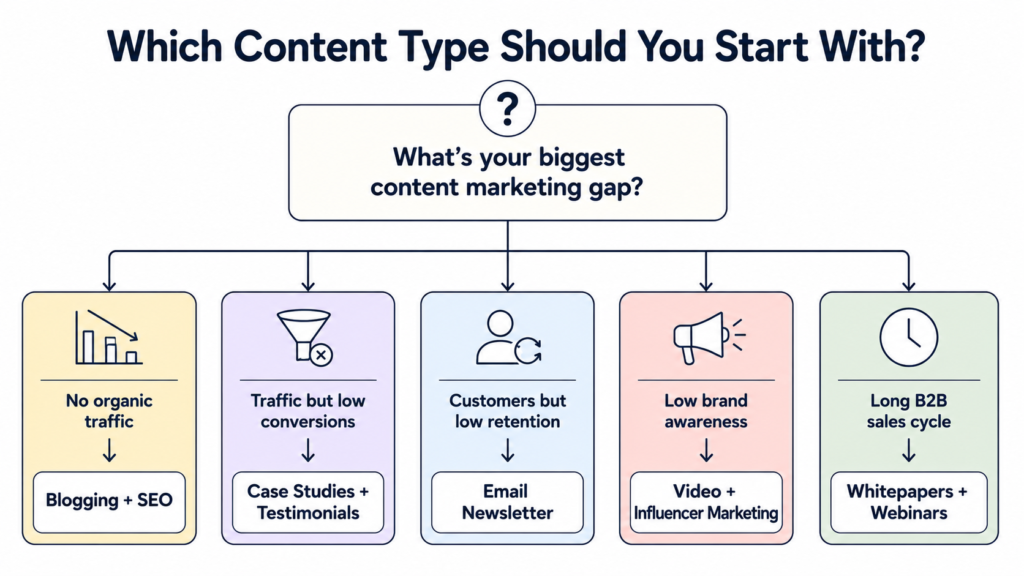
The honest answer is: it depends on where your gap is. But here is a practical starting framework:
- If you have no organic traffic: Start with blogging and SEO. It is the foundation everything else builds on.
- If you have traffic but low conversions: Invest in case studies and testimonials. You are getting visitors but not convincing them.
- If you have customers but low retention: Build an email newsletter. You are not maintaining the relationship after the sale.
- If you are invisible in your niche: Consider video and influencer partnerships. You need awareness before any other content type can do its work.
- If you are a B2B business with long sales cycles: Add whitepapers and webinars to your mix. Your buyers need in-depth information over a long evaluation period.
The most effective content marketing programmes combine formats across the entire funnel, using different content types to serve different needs at different stages. But starting with everything at once is a recipe for doing nothing particularly well. Pick the highest-priority gap and go deep before going wide.
Final Thoughts
Content marketing works. The evidence is overwhelming. What separates the brands that see compounding returns from those that publish into the void is the strategic clarity about which content types serve which audiences at which stages of the buying journey.
Pick the formats that match your audience, your goals, and the stage of the funnel where you most need to improve. Go deep before you go wide. And treat your content as an asset, not a task.
If you want help identifying which content types to prioritise for your specific business and audience, the Justwords team has been building content strategies for over 16 years across B2B and B2C. Talk to us, and we will help you figure out exactly where to start.
FAQs About Types of Content Marketing
What are the main types of content marketing?
The most widely used content types are blog posts, video content, podcasts, infographics, case studies, customer testimonials and reviews, white papers, influencer content, and email newsletters. Each serves a different purpose at a different stage of the buyer journey.
Which type of content marketing has the highest ROI?
Short-form video currently delivers the highest ROI according to the majority of marketers. Email marketing delivers among the highest returns of any channel when measured over time. For B2B specifically, case studies and long-form blog content that rank in search deliver strong, compounding returns.
How do I choose the right content type for my business?
Start by identifying your gap. If you have no organic traffic, prioritise blogging and SEO. If you have traffic but poor conversion rates, invest in case studies and testimonials. If you struggle with customer retention, build an email newsletter. Match the format to the stage of the journey where your prospects are dropping off.
What content type works best for B2B?
58% of B2B marketers say video is the most efficient content type, followed by case studies (53%), ebooks and research reports (45%), and short blog posts (45%). For lead generation specifically, white papers and long-form thought leadership content are consistently rated among the most effective formats.
Do I need to use all types of content marketing?
No. Trying to do so usually means doing none of them particularly well. Start with the two or three formats most relevant to your audience and your goals, master them, then expand. Consistency on fewer channels delivers better results than thin presence across all of them.
What is the role of AI in content marketing in 2026?
Most marketers now use AI tools in their content workflows. AI is most effective as a production accelerator – for drafting, repurposing, research assistance, and content gap analysis. The content types that remain most resistant to full AI automation are those that require genuine expertise, original data, and first-person experience. Examples include case studies, original research, expert interviews, and opinion-led long-form content.