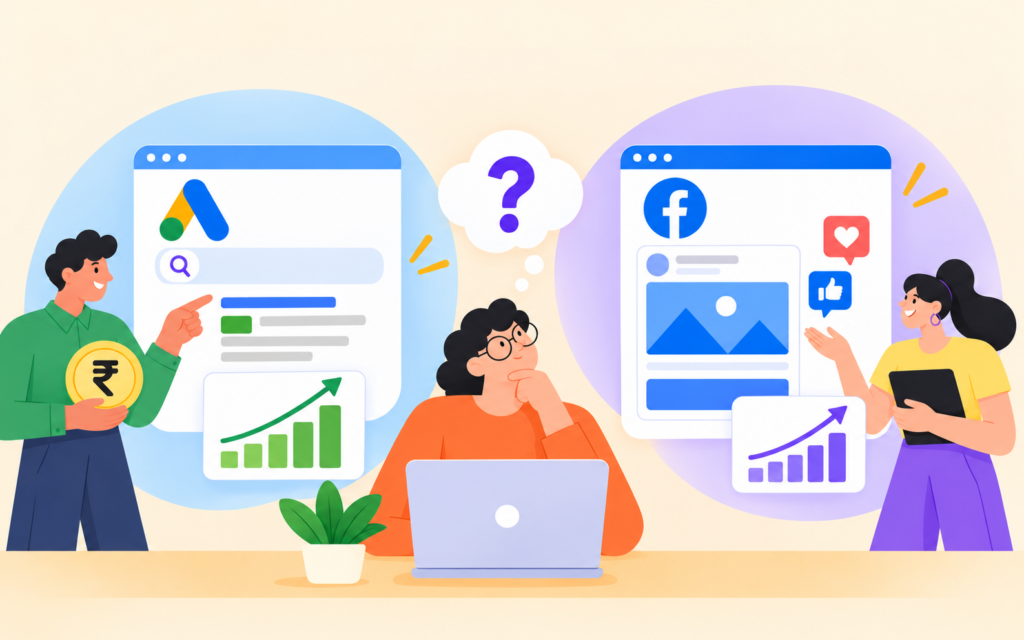
Content marketing and digital marketing are not the same thing. But they are not competitors either. Digital marketing is the umbrella. Content marketing is one of the most powerful disciplines within it. Confusing the two, or treating them as an either/or choice, is one of the most common strategic mistakes businesses make.
Here is a clear breakdown of what each means, how they differ, and how to think about using both.
What Is Content Marketing?
The Content Marketing Institute defines it well:
“Content marketing is a strategic marketing approach focused on creating and distributing valuable, relevant, and consistent content to attract and retain a clearly defined audience — and, ultimately, to drive profitable customer action.”
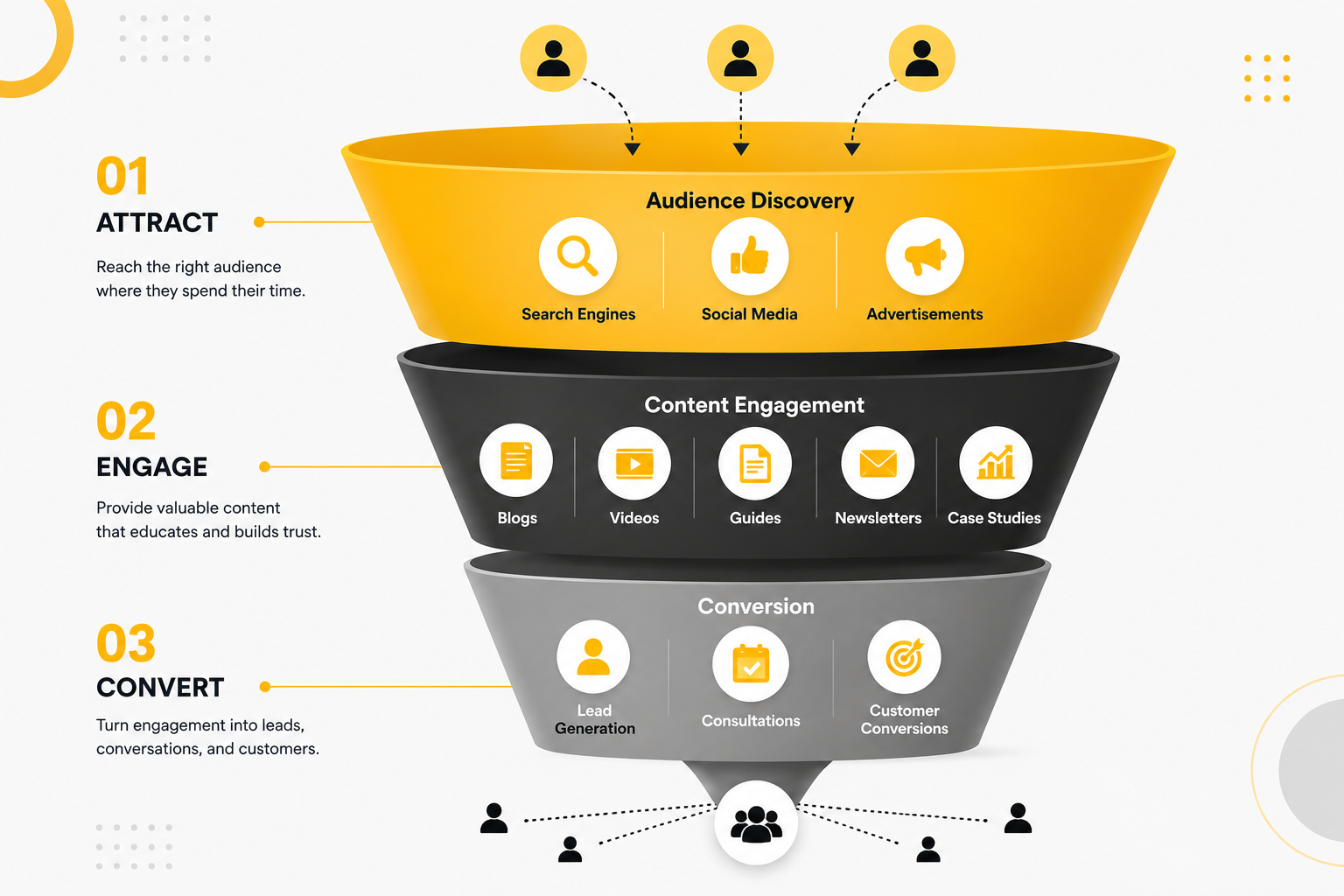
In practice, content marketing is about earning your audience’s attention rather than buying it. You do this by consistently producing content that genuinely helps or interests them (e.g., blogs, videos, case studies, guides, newsletters) rather than by interrupting them with ads.
Why does this matter? Because buyers today research before they buy. 47% of B2B buyers consume 3–5 pieces of content before initiating contact with a sales representative. If your content is part of that research journey, you have a significant advantage before anyone picks up the phone or fills out a form. That’s why content marketing is part of 92% of B2B marketers’ marketing strategies, and 49% of B2B marketers say it is their most effective channel for driving revenue.
The payoff compounds over time. Businesses that blog consistently see 13 times more positive ROI than sporadic publishers, and SEO and blog content deliver an average ROI of 748% for B2B companies. This is not quick-win territory, though. Content marketing builds an asset that keeps working long after you have published it.
What Is Digital Marketing?
Digital marketing is any marketing effort that uses the internet or a digital device. It is a broad umbrella that includes content marketing, paid advertising, SEO, email marketing, social media marketing, influencer marketing, and more.
If content marketing is about attracting and nurturing an audience through value, digital marketing, in its broader sense, is about using every available digital channel to achieve business goals: traffic, leads, conversions, and sales.
Some of those channels are paid and deliver results immediately. Others are organic and compound over time. The global digital advertising market reached $1 trillion in 2026, which reflects just how central digital channels have become to how businesses reach customers.
The key distinction: digital marketing can get you in front of someone fast. Content marketing earns their trust once you are there.
What Is the Difference Between Content Marketing and Digital Marketing?
The clearest way to think about it: content marketing is a strategy; digital marketing is a set of channels and tools.
Content marketing asks: What can I create that will genuinely help my audience?
Digital marketing asks: Which channels and tactics will reach my audience and drive conversions?
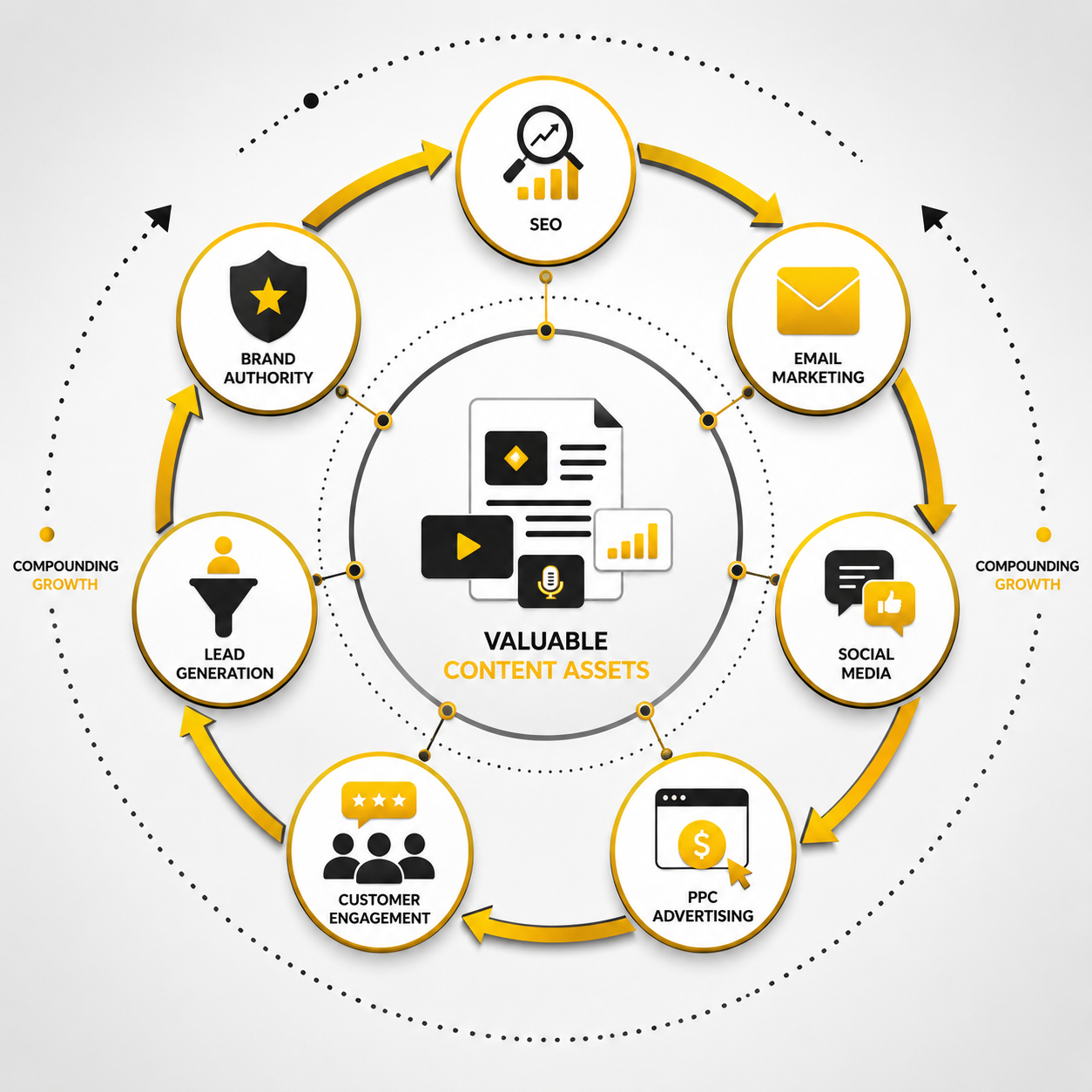
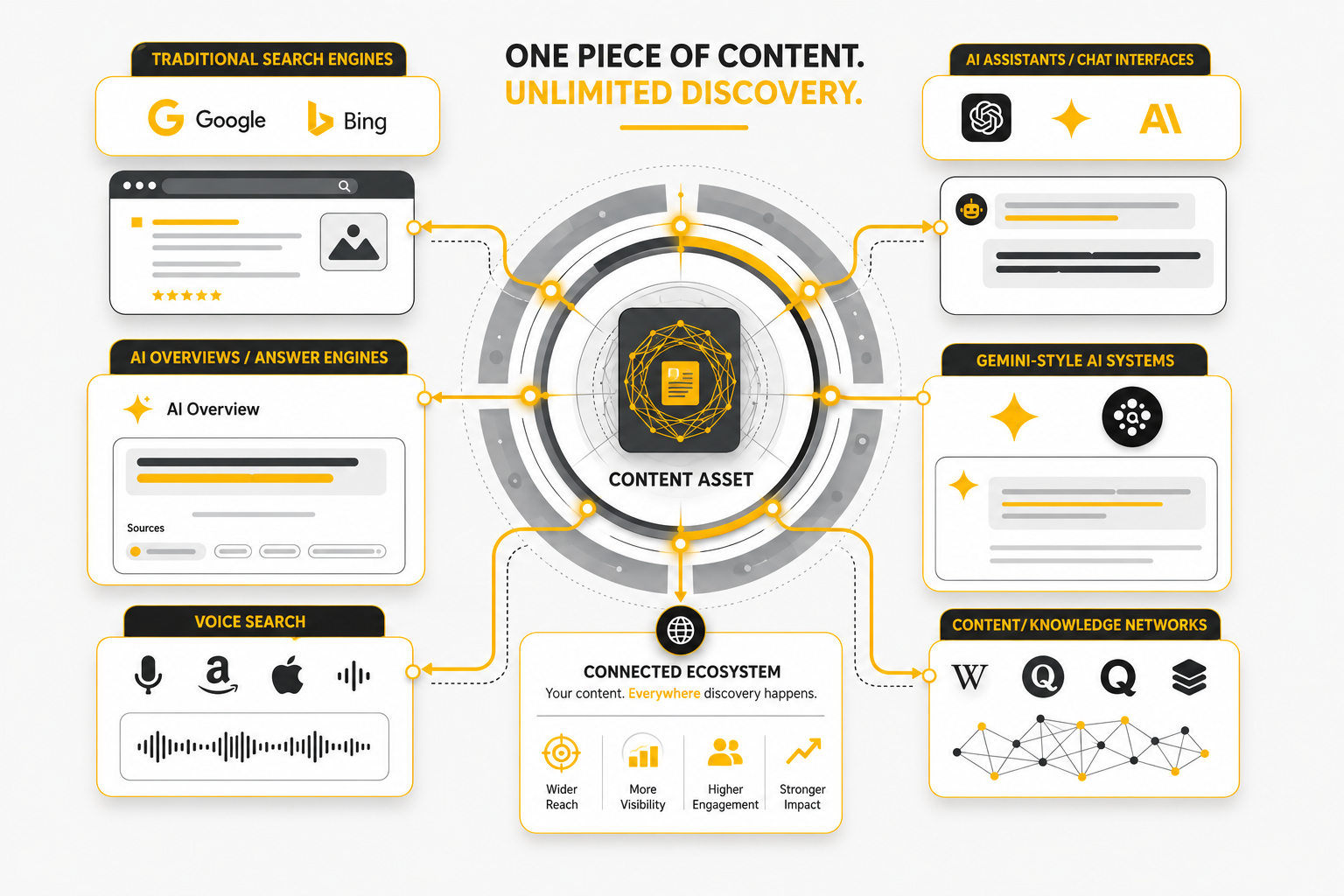
Content marketing feeds into digital marketing. The blog post you write is a content marketing asset. The SEO that gets it found, the social ads that amplify it, the email newsletter that distributes it – those are digital marketing tactics. Remove the content, and most of those channels have nothing worth promoting.
Here is a side-by-side view:
| Content Marketing | Digital Marketing | |
| Focus | Building trust and authority through valuable content | Driving traffic, leads, and conversions across channels |
| Approach | Pull (attracts audience organically) | Mix of pull and push (organic + paid) |
| Timeline | Long-term asset building | Can deliver immediate results (especially paid) |
| Primary tools | Blogs, videos, case studies, newsletters, podcasts | SEO, PPC, social ads, email, influencer marketing, content |
| Cost model | Higher upfront investment, lower cost per lead over time | Scalable with budget; leads stop when spend stops |
| Measures success by | Traffic, engagement, leads, authority | Conversions, ROAS, CPC, CPL |
| Relationship to sales | Indirect; builds the conditions for conversion | Often more directly tied to conversion |
These are not in opposition. The smartest businesses use content marketing to build the asset and digital marketing channels to amplify and monetise it.
Is Content Marketing Part of Digital Marketing?
Yes, content marketing is technically a subset of digital marketing, but the relationship is more nuanced than a simple hierarchy.
But in terms of how content marketing functions strategically, it is better understood as the foundation on which other digital marketing activities run. Your ads perform better when they send traffic to genuinely useful content. Your SEO works because your content answers real questions. Your email nurture sequences work because the content in them is worth reading.
At Justwords, we have seen this pattern play out repeatedly with clients who were spending heavily on PPC but had no content strategy to support it. The paid traffic came and immediately left. Once we helped them build a content layer, the same ad spend started converting at a completely different rate. Paid channels can bring people to the door; content is what convinces them to walk in.
Types of Content Marketing Formats
Content marketing covers far more than blogging. Here are the formats that matter most right now:
- Blogs and long-form articles remain the backbone of most content strategies, especially for SEO and thought leadership. B2B companies with blogs generate 67% more leads than those without. The bar for quality has risen significantly though; a generic 800-word blog post no longer competes. Original research, strong opinions, and genuine expertise are what rank and get read today.
- Short-form video has become the highest-ROI content format available. Short-form video produces the highest return among all content types, with 21% of marketers citing it as delivering the best ROI in 2025. This includes Reels, YouTube Shorts, and LinkedIn video. If you are not producing video, you are absent from the conversation format that most audiences now prefer.
- Case studies and customer success stories are the most effective content type for B2B conversion. Nothing replaces a well-documented proof point.
- Podcasts and audio content have moved from niche to mainstream. Today, 61% of B2B marketers used audio platforms like podcasts, and branded podcasts have been found to increase brand favourability.
- Newsletters have seen a significant resurgence. 71% of B2B marketers use email newsletters as part of their content strategy, and 77% of B2B marketing teams say instructive, personalised email content performs best.
- Interactive content such as calculators, assessments, and quizzes is fast becoming one of the most underused formats in Indian B2B marketing. Interactive content yields twice the engagement rate compared to static articles.
Types of Digital Marketing
Here’s what digital marketing involves:
- SEO (Search Engine Optimisation) remains foundational. But SEO has expanded well beyond keyword optimisation. In 2026, businesses also need to think about AEO (Answer Engine Optimisation), which focuses on structuring content to appear in AI-generated responses and tools like ChatGPT, Google’s AI Overviews, Gemini, Claude, and Perplexity. AEO optimises content to increases the chance your content gets cited in AI-generated search responses and appear as direct answers in voice queries. For any business investing in content, building for all three is now the standard.
- PPC (Pay Per Click) delivers targeted traffic quickly. You pay for each click your ad receives. And when campaigns are well-optimised, it can be one of the most controllable channels for lead generation. The downside is that traffic stops the moment your budget stops. PPC works best when it supports a content strategy, not when it replaces one.
- Social Media Advertising, including paid promotion on platforms like Instagram, LinkedIn, Meta, and YouTube, has become essential for most businesses, particularly those targeting audiences that do not convert through search. LinkedIn is increasingly important for B2B brands in India; Instagram and Meta for B2C and D2C.
- Email Marketing deserves its place here despite being one of the oldest digital channels. Email marketing drives a 2.4% conversion rate for B2B brands (among the highest of any channel) and remains the most cost-effective way to nurture leads over time.
- Influencer Marketing has matured from a brand awareness tactic to a full-funnel channel. Combined with strong content, it can accelerate both reach and trust simultaneously.
So, Which Should You Focus On?
The honest answer: both, in the right proportion for your stage and goals.
If you are an early-stage business that needs fast visibility and lead generation, paid digital marketing channels give you speed and control you cannot get from content alone.
If you are building for the long term (and almost every business should be), content marketing is what reduces your dependence on paid spend over time and builds the kind of authority that converts without needing to constantly outbid competitors.
The most successful businesses we work with at Justwords treat content marketing and digital marketing as a single integrated strategy, not separate departments with separate budgets. Content informs what ads to run, ads amplify what content resonates, and SEO connects both to organic discovery.
Choosing one over the other is like choosing between the engine and the fuel. You need both.
Need help building a content marketing strategy that works with your broader digital marketing goals? Talk to the Justwords team.
Frequently Asked Questions (FAQs)
1. Is content marketing a part of digital marketing?
Yes. Content marketing is a strategy that lives within the broader digital marketing ecosystem. But it is also the foundation on which most other digital marketing tactics depend.
2. Can a small business do content marketing without a big budget?
Yes. It is often where small businesses have the most advantage. Authentic, specific, locally relevant content frequently outperforms generic content produced at scale by larger competitors. The investment is primarily time (not money) especially in the early stages.
3. What comes first – content marketing or digital marketing?
Build the content foundation first. Without something genuinely worth reading, watching, or engaging with, most digital marketing channels become expensive exercises in bouncing traffic.
4. How long does content marketing take to show results?
Content marketing typically takes 3–6 months before meaningful organic traction, and 6–12 months before it becomes a reliable lead generation engine. This is why businesses that invest early, before they desperately need the leads, almost always outperform those that turn to content marketing as a last resort.